Highlights
- Married men and women who most fully embrace the classic beliefs and practices of Protestant and Catholic Christianity enjoy the happiest marriages in America. Post This
- The most orthodox sectors of the Catholic Church appear to be the most successful at fostering strong, stable marriages. Post This
America is in the midst of an epidemic of social isolation. Driven in part by the digital revolution of the last 15 years, the nation is witnessing atomization and anomie at a scale perhaps never before seen in our nation’s history. Daily in-person conversation, teen socializing, face-to-face community life, and even sex have all declined sharply in recent years. We are living in what The Atlantic writer Derek Thompson has called the “Anti-Social Century.”
A new IFS report, The Devout Difference, examines two institutions—faith and family—that have long been among America’s most reliable antidotes to isolation. The evidence suggests both remain signal sources of social solidarity even as they have lost ground. Religion has a long record of supporting Americans’ physical, social, and emotional well-being. Marriage has grown increasingly protective against early death, suicidal thoughts, and unhappiness over the past 20 years, building on its longstanding ties to better health, financial security, and emotional well-being for adults and children alike.
These institutions may be especially valuable now in a society that has grown more technologically distracted, atomistic, and economically unequal—conditions that erode the informal sources of meaning and belonging that allow men and women to thrive. Today, faith and family may be particularly valuable in fostering the bonds that afford men and women a sense of communion with others, and the confidence—via the commitments they engender—that those bonds are reliable sources of social, emotional, and normative support.
Given the central role that faith and family play in American life, our new report takes up three questions: 1) How is religion linked to entry into marriage and family life today? 2) How is it tied to marital stability? and 3) How do specific traditions and beliefs shape the character of marriage, from sexual frequency to marital quality?
In answering these questions, we focus on the link between religion and marriage within America’s largest religious tradition, Roman Catholicism, but we also show how churchgoing is linked to marital quality for Protestants.
5 Key Findings from the Report
Here are the major findings from this new IFS report:
1. The Faith-Family Paradox.
American Christianity’s hold on marriage and family life has shrunk since the 1970s (with Catholic weddings falling by 74% since 1970 to the present), but the believers who remain are more likely to enjoy strong, stable families. Churchgoing Catholics and Protestants marry more, have more children, and divorce less than their secular peers. For instance, churchgoers are 39% more likely to be married today. They are fewer in number, but stronger in family life.
2. Christian couples are happier.
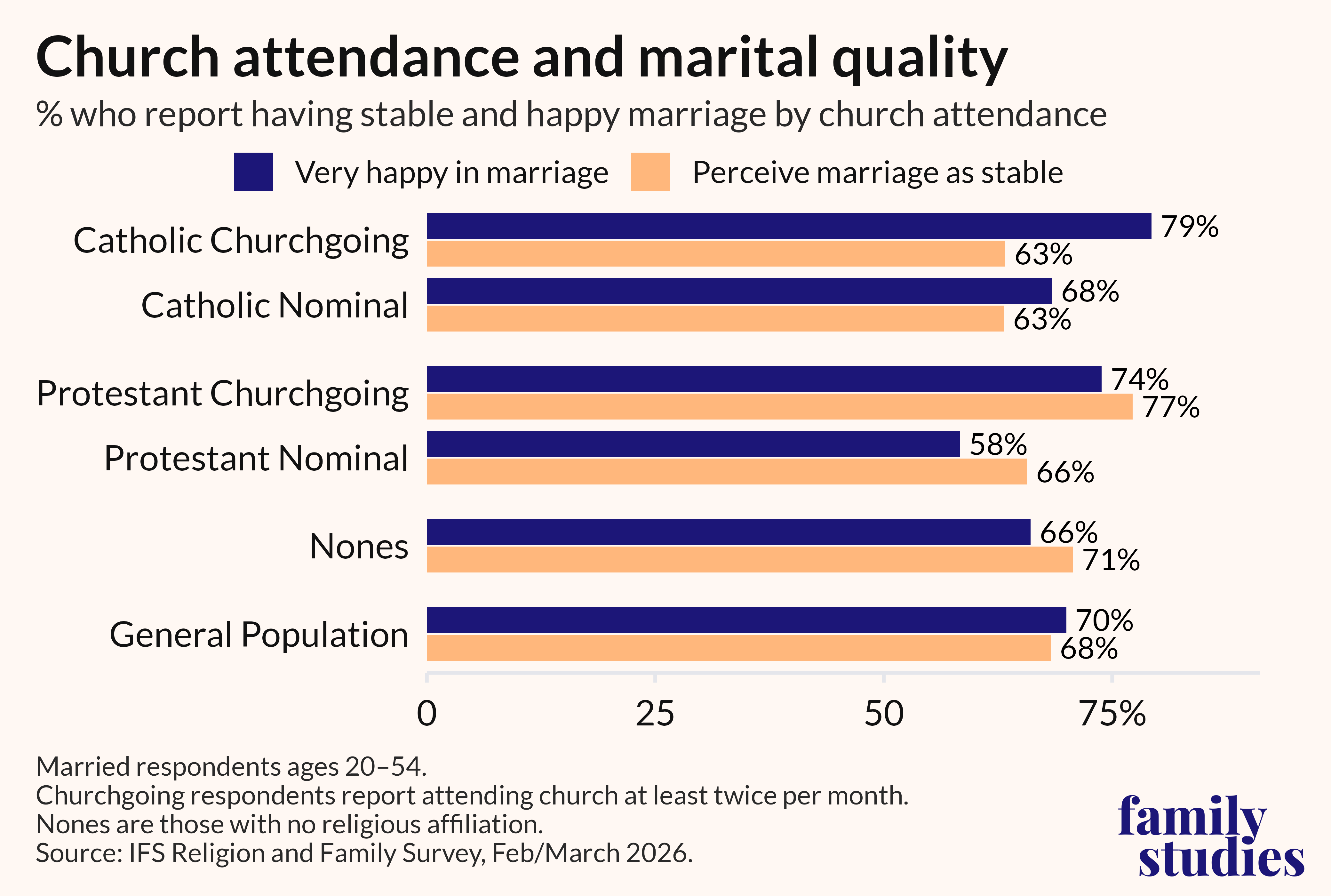
Married men and women who most fully embrace the classic beliefs and practices of Protestant and Catholic Christianity—including the conviction that marriage is a lifelong commitment, “till death do us part”—enjoy the happiest marriages in America. In fact, 79% of churchgoing Catholics and 74% of churchgoing Protestants are very happily married, compared to 66% of non-religious husbands and wives. And husbands and wives who embrace an ethic of marital permanence have 1.85 higher odds of being happily married.
3. Christian couples have more sex.
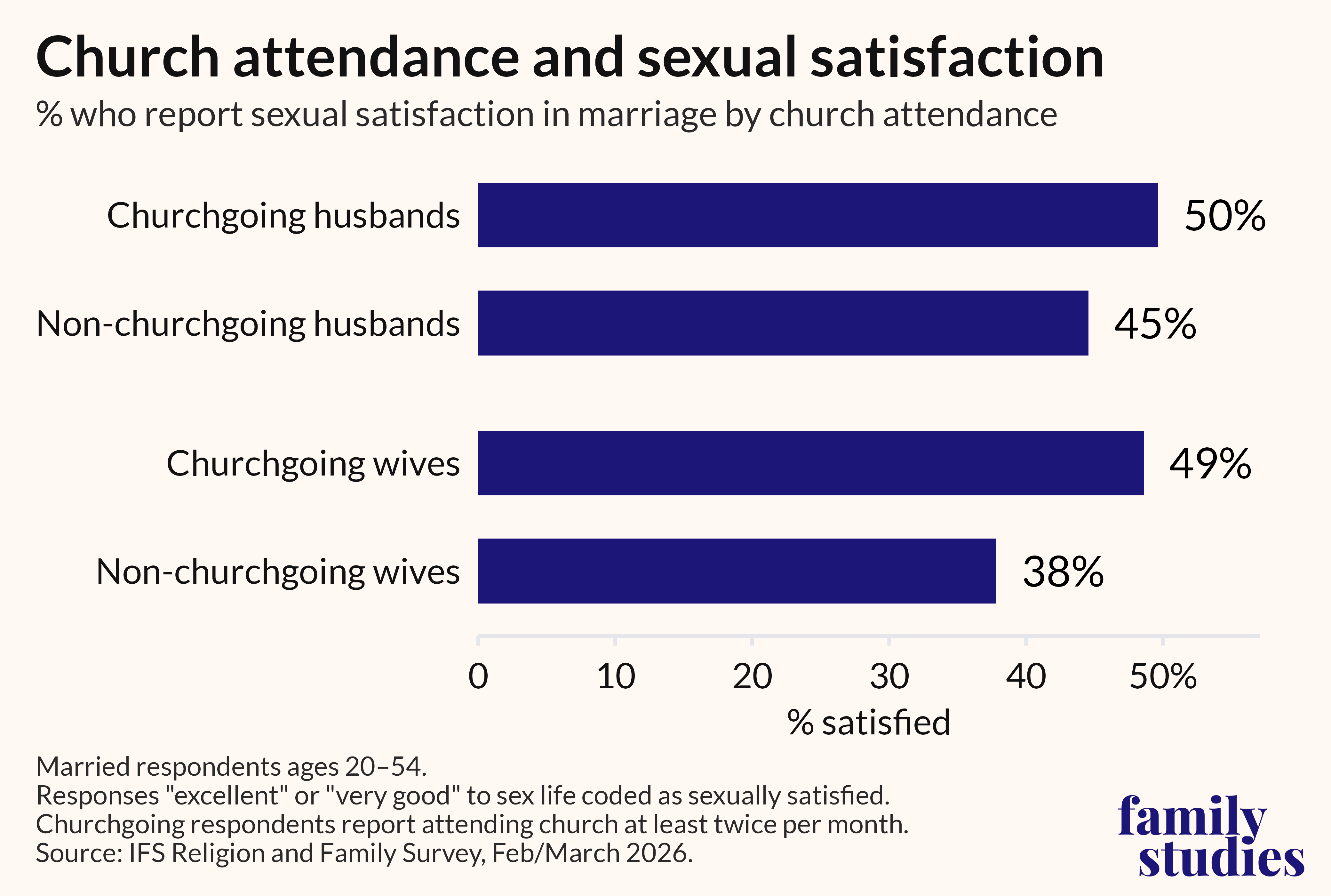
Even the most intimate expression of connection in a marriage bears this out: religious couples enjoy significantly more sex, and more sexual satisfaction, than their secular peers. Indeed, they have been largely untouched by today’s “sex recession”—with a strong majority of churchgoing spouses (62%) having sex at least once a week now, even as sex drops for nonreligious spouses to the point where only a minority (48%) have sex at least weekly. Churchgoers also have 1.42 times higher odds of being sexually satisfied than husbands and wives who are not religiously active.
4. The Catholic Church still has real problems to address.
A large minority of Catholic husbands and wives worry their marriage may not last, some struggle with guilt and conflict tied to pornography, Catholic parents of large families (three or more children) report added strain, and only a minority of Catholics embrace the kind of orthodox faith most conducive to a strong and stable marriage and family life. For instance, a large minority (25%) of churchgoing husbands view pornography monthly or more (versus 35% of husbands who rarely or never attend church).
5. The most orthodox sectors of the Catholic Church appear to be the most successful at fostering strong, stable marriages.
Here, we focus on alumni of FOCUS, the nation’s largest Catholic collegiate ministry and the sponsor of this report. They are more likely to marry and to be happily married, and less likely to worry about their marriage’s future, compared to other Catholic men and women—and even more so compared to non-religious young adults.
Read the full report here.