Highlights
When I started my first job out of college as a researcher at Harvard Business School, my coworkers had trouble remembering that my new husband was not my boyfriend or fiancé. We had just gotten married at ages 22 and 24, yet my two brilliant colleagues, who were headed to Harvard Business School and Harvard Law School, kept referring to him as my boyfriend. We laughed about it, but their confusion revealed something deeper: to them, marrying young seemed puzzling. Why would someone “limit” their choices so early in life?
Yet getting married at 22 never felt limiting to me. Looking back 20 years later, I believe it helped me flourish professionally and personally. My husband supported me through graduate school and career transitions, and by marrying young, we built our lives together rather than trying to merge two fully formed adult lifestyles later.
Today, the average age of marriage is about 31 for men and 28 for women—roughly six years older than when my husband and I married. While earlier marriage may not be the right path for everyone, marrying in one’s early-to-mid-twenties can offer meaningful advantages for many young women.
Growing Together
One benefit of marrying earlier is the opportunity to grow together. Early adulthood is a formative period when people are still shaping their values, ambitions, and routines. Couples who marry during this phase often develop those patterns together—from financial decisions to career priorities to family plans. By contrast, couples who marry later may have to reconcile two already well-established adult lifestyles.
Financial habits provide a useful example. Studies show that couples who fully integrate their finances—sharing bank accounts and making financial decisions jointly—report higher marital satisfaction and lower breakup rates than couples who maintain separate bank accounts. Shared finances encourage joint planning and a sense of shared goals. Marrying earlier may make this kind of integration easier because couples are building their financial lives from the beginning.
Early adulthood is a formative period when people are still shaping their values, ambitions, and routines. Couples who marry during this phase often develop those patterns together.
Other relationship patterns may develop similarly. Data from the General Social Survey (GSS) show that both women and men report the happiest marriages when they had fewer sexual partners prior to marrying. Among those whose only sexual partner is their spouse, about 65% of women and 73% of men report being “very happy” in their marriages, and martial happiness declines gradually as the number of prior partners increase. Marrying earlier shortens the time spent in the dating market, reduces opportunities for comparison of sexual partners, and increases the likelihood that important relationship milestones, including sexual intimacy, develop within the marriage itself.
For many couples, building these parts of life together strengthens their bond and commitment.
Marriage as a Career Partnership
Contrary to the fear that marriage limits opportunity, it can often expand it. Getting married younger allows couples more time to support each other through career transitions, education, and professional risks.
My husband and I took turns supporting one another through graduate school and early career opportunities. When I pursued my Ph.D., he supported us financially. Later, when he attended business school, I worked and helped support us. Over the years we relocated multiple times, often for internships, graduate programs, or new job opportunities.
Because we were making decisions together, we had more flexibility to pursue opportunities that might have been difficult individually, and we also took on less debt. Economists describe this dynamic as “risk sharing”: marriage allows couples to pool resources and support each other through periods of investment in education or career advancement.
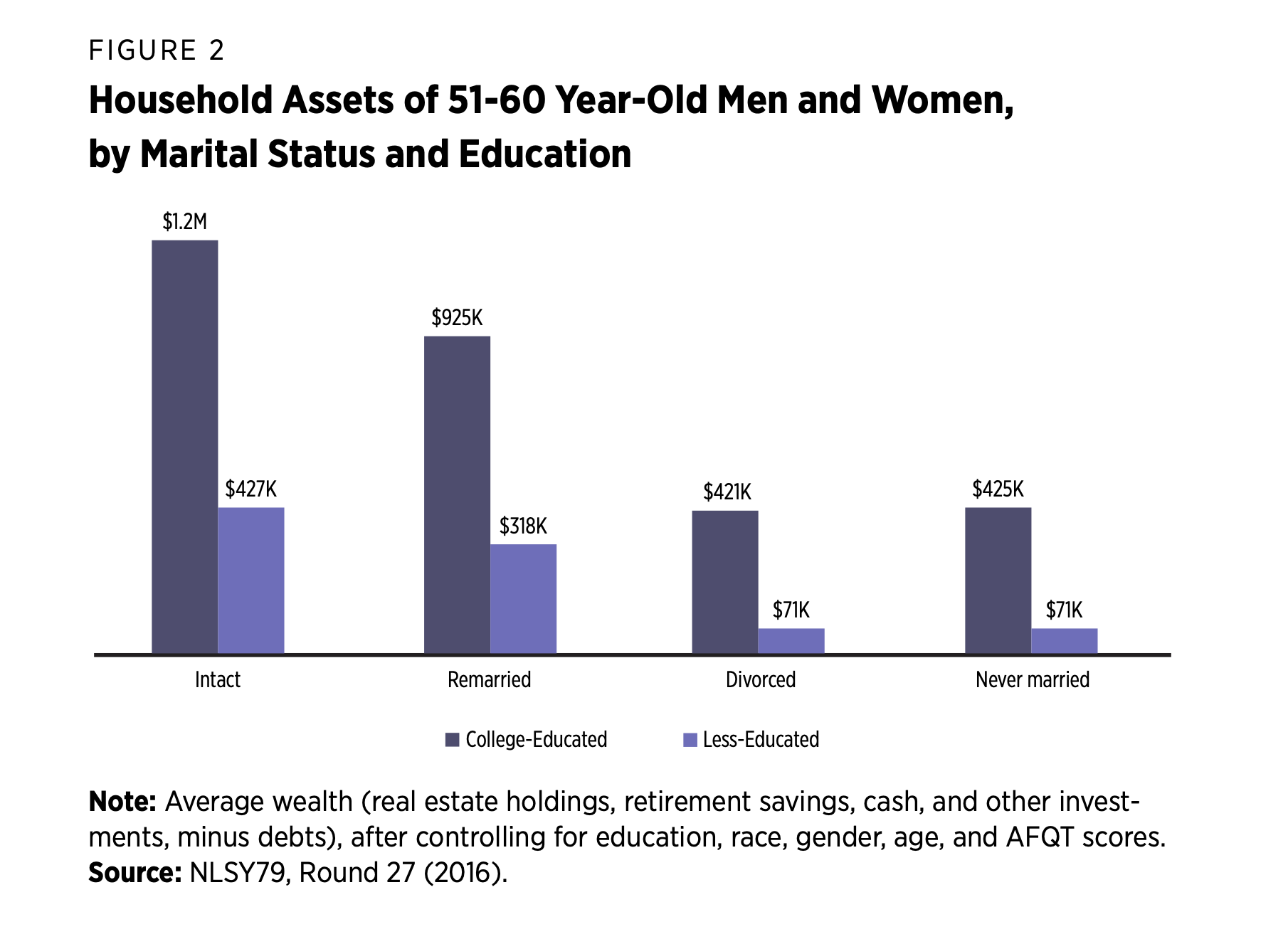
Research suggests our experience is not unusual. Studies have found that married graduate students are more likely to complete their programs than unmarried students. Other research links marriage with greater career stability, career adaptability, and higher long-term earnings. Married couples also tend to save more and accumulate more wealth than unmarried individuals with similar backgrounds.
Happiness and Well-Being
Marriage may also support women’s flourishing in ways that go beyond practical cooperation. A supportive spouse provides companionship and encouragement during stressful periods of life.
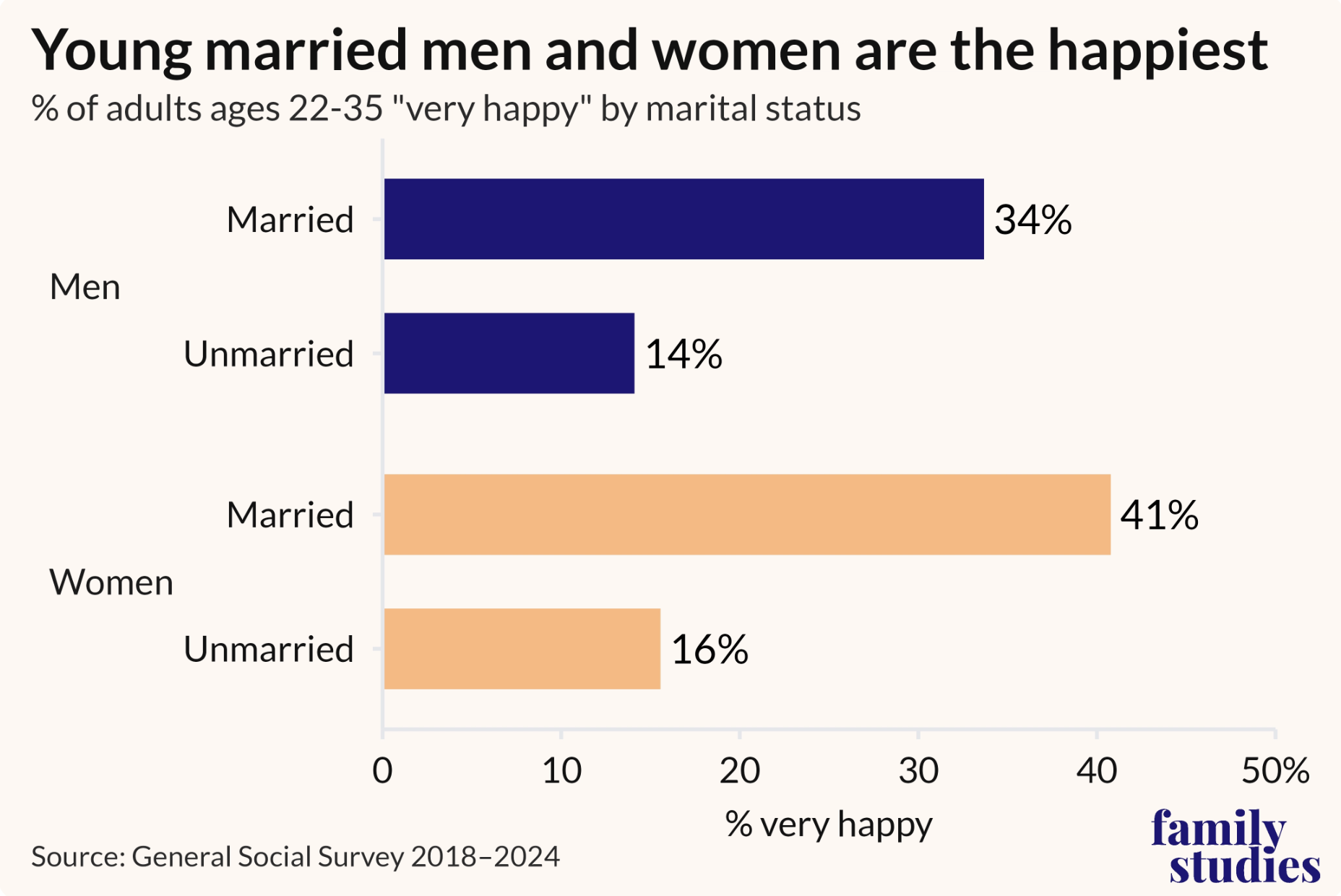
Decades of social science research find that married people report higher levels of happiness than unmarried people. Data from the GSS consistently show that married adults are far more likely to say they are “very happy” than their unmarried peers.
This pattern extends to young adults as well. One analysis found that 41% of young married women reported being “very happy,” compared with 16% of unmarried women. Among men, 34% of young married men reported being very happy compared with 14% of unmarried men. In other words, young married adults were more than twice as likely to report being happy as their young, unmarried peers.
These differences extend beyond self-reports. Research finds that people in stable, satisfying marriages exhibit lower physiological stress markers, lower rates of depression as well as reduced risk of the first onset of many mental disorders.
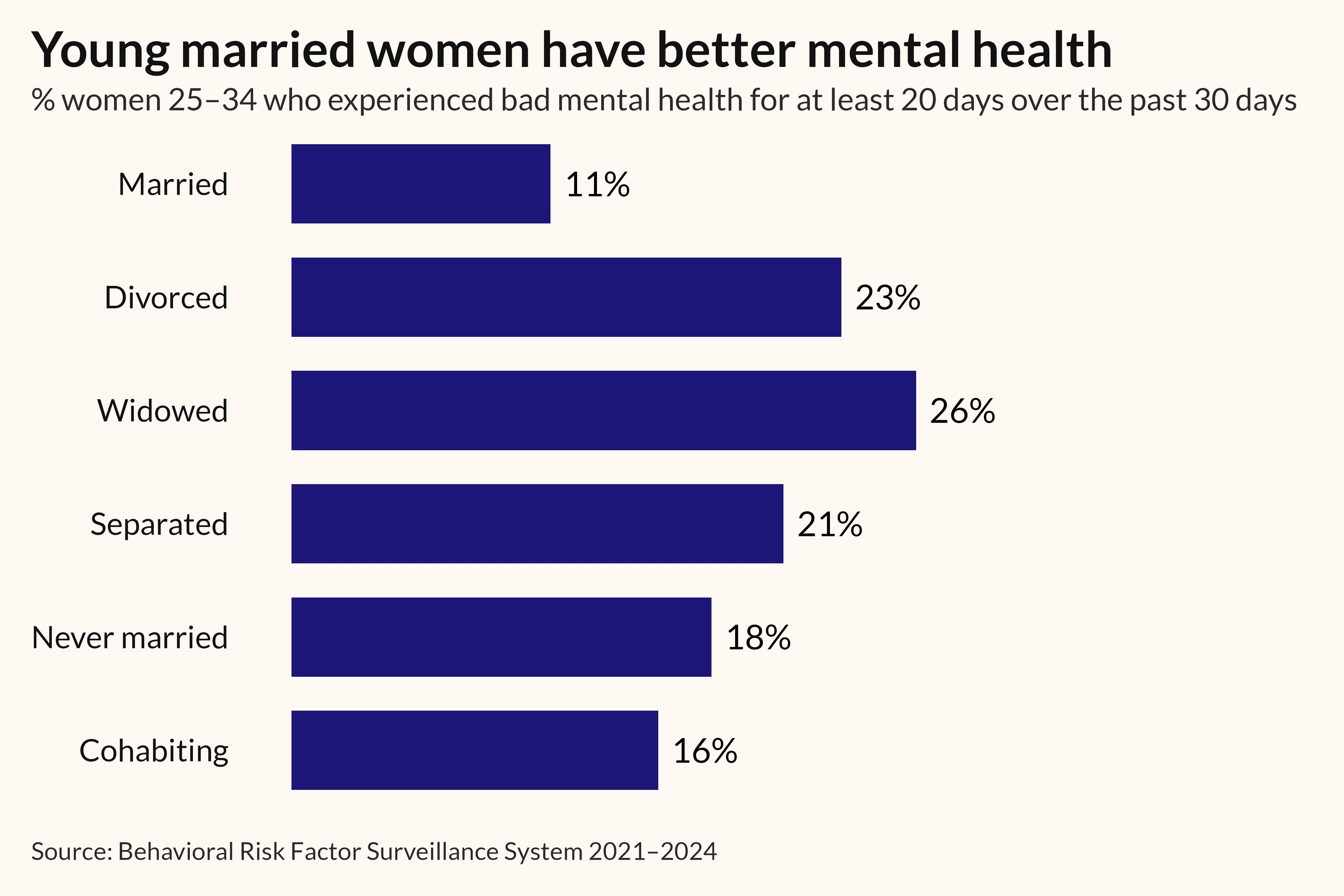
Of course, marriage does not guarantee happiness. But a stable, supportive partnership may provide a framework of commitment and shared purpose that can strengthen long-term well-being.
Family and Fertility
Getting married younger also gives young women more choices about family planning. Marrying at 24 doesn’t require you to have kids at 24, but it preserves more options than marrying at 34.
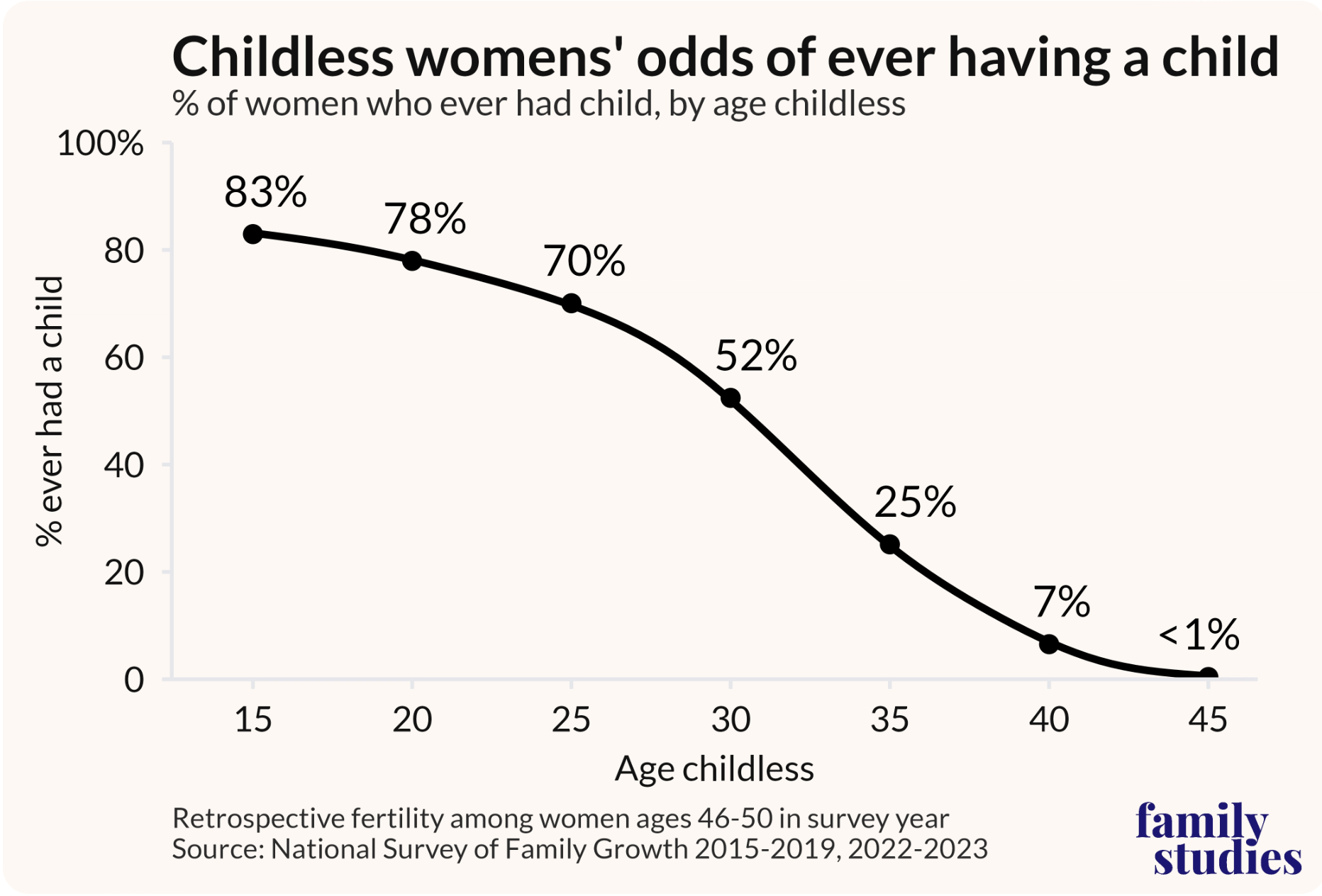
That’s because female fertility declines meaningfully beginning in the early thirties and more rapidly after the mid-thirties. Consistent with this, retrospective survey data of 46-50 year old women (largely past their reproductive years) show that among those who reached age 30 without children, only 52% went on to have a child, according to research by IFS. By age 35, the share fell to roughly 25%. While modern reproductive technologies can help some couples conceive later in life, they are expensive, physically and emotionally demanding, and far from guaranteed.
In vitro fertilization (IVF), for example, often involves weeks of daily hormone injections, frequent medical monitoring, surgical egg retrieval under anesthesia, and emotionally taxing waiting periods to see whether the procedure succeeds. A single cycle can cost tens of thousands of dollars, and many couples require multiple attempts.
In addition, certain health risks for babies, including chromosomal abnormalities such as Down syndrome, autism spectrum disorder, and fetal loss also increase with maternal age. While most pregnancies result in healthy children, these risks rise significantly in the mid to late 30s and 40s.
Marrying at age 24 doesn’t require you to have kids at 24, but it preserves more options than marrying at age 34.
Marrying earlier does not necessarily mean having children immediately. But it provides more flexibility in deciding when, and how many, to have.
Dating Pool Advantage
Marrying younger can expand one’s chances of finding a compatible partner. As Mark Regnerus pointed out in his essay, college and graduate school place young adults in large, concentrated dating pools of unmarried peers with similar age, education, and life stage which makes it easier to meet someone with shared values and long-term goals.
These settings also foster educational homogamy—marriages between partners with similar education levels—which tend to be more stable. As careers intensify later, long hours and relocations often reduce opportunities to build relationships. Starting earlier therefore widens options and may improve the odds of finding a good match.
Rethinking the Timeline
In recent decades, cultural messages have increasingly encouraged young adults—especially women—to delay marriage until their late twenties or early thirties. The intention is often to protect women’s independence and opportunities.
Yet the reality is more nuanced. For many women, marrying earlier can offer meaningful advantages: the opportunity to grow together with a partner, a partnership that supports career ambitions, emotional support that enhances happiness and well-being, a wider dating pool, and greater flexibility in family planning. While social science cannot always disentangle cause from selection, consistent patterns across studies suggest that stable marriages may play an important role in these positive outcomes.
Marrying young may not be the right path for everyone. But neither is indefinite delay. For many women, the early-to-mid twenties can be a valuable window to build a partnership that strengthens both their personal well-being and family life. Building a strong partnership earlier in adulthood can be one of the most powerful foundations for a flourishing life.
Emily Ekins is Vice President of the Politics & Society Department and Director of Polling at the Cato Institute.
*Photo credit: Shutterstock
Editor's Note: This is essay #3 in our "Get Married Young" series. Read essay #1 from Lisa Britton here, and essay #2 from Mark Regnerus here.