Introduction
America is in the midst of an epidemic of social isolation. Driven in part by the digital revolution of the last 15 years, the nation is witnessing atomization and anomie at a scale perhaps never before seen in our nation’s history. Daily in-person conversation, teen socializing, face-to-face community life, and even sex have all declined sharply in recent years. We are living in what The Atlantic writer Derek Thompson has called the “Anti-Social Century.”
This report examines two institutions—faith and family—that have long been among America’s most reliable antidotes to isolation. The evidence suggests both remain signal sources of social solidarity even as they have lost ground. Religion has a long record of supporting Americans’ physical, social, and emotional well-being. Marriage has grown increasingly protective against early death, suicidal thoughts, and unhappiness over the past 20 years, building on its longstanding ties to better health, financial security, and emotional well-being for adults and children alike. These institutions may be especially valuable now in a society that has grown more technologically distracted, atomistic, and economically unequal—conditions that erode the informal sources of meaning and belonging that allow men and women to thrive. Today, faith and family may be particularly valuable in fostering the bonds that afford men and women a sense of communion with others, and the confidence, via the commitments they engender, that those bonds are reliable sources of social, emotional, and normative support.
Given the central role that faith and family play in American life, The Devout Difference takes up three questions: 1) How is religion linked to entry into marriage and family life today? 2) How is it tied to marital stability? and 3) How do specific traditions and beliefs shape the character of marriage, from sexual frequency to marital quality?
In answering these questions, we focus on the link between religion and marriage within America’s largest religious tradition, Roman Catholicism, but we also show how churchgoing is linked to marital quality for Protestants.
Key Findings
The major findings of this Institute for Family Studies report are as follows:
- The Faith-Family Paradox. American Christianity’s hold on marriage and family life has shrunk since the 1970s (with Catholic weddings falling by 74% since 1970 to the present), but the believers who remain are more likely to enjoy strong, stable families. Churchgoing Catholics and Protestants marry more, have more children, and divorce less than their secular peers. For instance, churchgoers are 39% more likely to be married today. They are fewer in number, but stronger in family life.
- Christian couples are happier. Married men and women who most fully embrace the classic beliefs and practices of Protestant and Catholic Christianity—including the conviction that marriage is a lifelong commitment, “till death do us part”—enjoy the happiest marriages in America. In fact, 79% of churchgoing Catholics and 74% of churchgoing Protestants are very happily married, compared to 66% of non-religious husbands and wives. And husbands and wives who embrace an ethic of marital permanence have 1.85 higher odds of being happily married.
- Christian couples have more sex. Even the most intimate expression of connection in a marriage bears this out: religious couples enjoy significantly more sex, and more sexual satisfaction, than their secular peers. Indeed, they have been largely untouched by today’s “sex recession”—with a strong majority of churchgoing spouses (62%) having sex at least once a week now, even as sex drops for nonreligious spouses to the point where only a minority (48%) have sex at least weekly. Churchgoers also have 1.42 times higher odds of being sexually satisfied than husbands and wives who are not religiously active.
- Still, the Catholic Church has real problems to address. A large minority of Catholic husbands and wives worry their marriage may not last, some struggle with guilt and conflict tied to pornography, Catholic parents of large families (three or more children) report added strain, and only a minority of Catholics embrace the kind of orthodox faith most conducive to a strong and stable marriage and family life. For instance, a large minority (25%) of churchgoing husbands view pornography monthly or more (versus 35% of husbands who rarely or never attend church).
- The most orthodox sectors of the Catholic Church appear to be the most successful at fostering strong, stable marriages. Here, we focus on alumni of FOCUS, the nation’s largest Catholic collegiate ministry and the sponsor of this report. They are more likely to marry and to be happily married, and less likely to worry about their marriage’s future, compared to other Catholic men and women—and even more so compared to non-religious young adults.
I. The Retreat from Religion and Marriage
The cultural revolutions of the 1960s and 1970s loosened the grip of religion and marriage on American life. Elites in the academy, media, and the professions recast both institutions as obstacles to human flourishing, urging Americans to shed the customs, norms, and values of family and faith whenever they stood in the way of self-actualization, equality, or freedom. The premise was that stripping away these institutions’ cultural authority—in favor of a vision of human beings as autonomous, self-directing agents—would finally free men and women to live their best lives. Rising affluence and the growth of the welfare state further eroded both institutions’ practical necessity for financial and social survival. Marriage and religion lost cultural legitimacy in this era, recast as obstacles to flourishing rather than vehicles for it.
The consequences followed quickly. Church attendance and affiliation dropped substantially, with frequent churchgoing—several times a month or more—falling from 49% to 32% from 1972 to 2024, according to the General Social Survey. The marriage rate plummeted as well, decreasing by more than 60% over this same period.
The eroding fortunes of faith and family are taking place within the U.S. Catholic Church. Even among self-identified Catholics, consistent weekly Mass attendance has fallen from 44% in the 1970s to just 18% today. The number of Catholic weddings stood at 415,000 in 1970 before falling to a historic low during COVID of 97,000; there were 109,000 weddings in 2024, which means that weddings are down 74% since 1970. This is but one sign of the declining power and influence of religion on American family life.
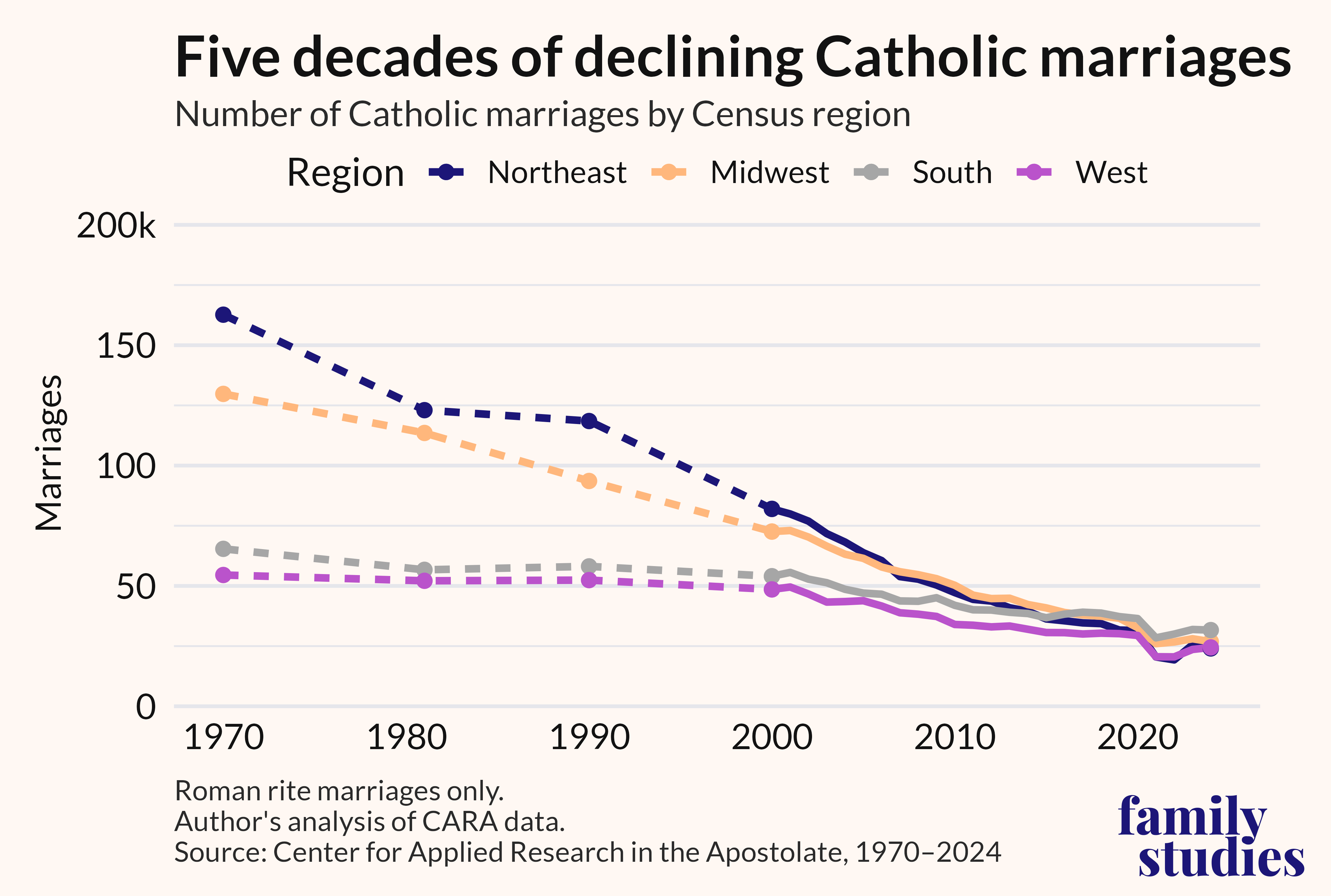
Figure 1: Number of Catholic marriages by region.
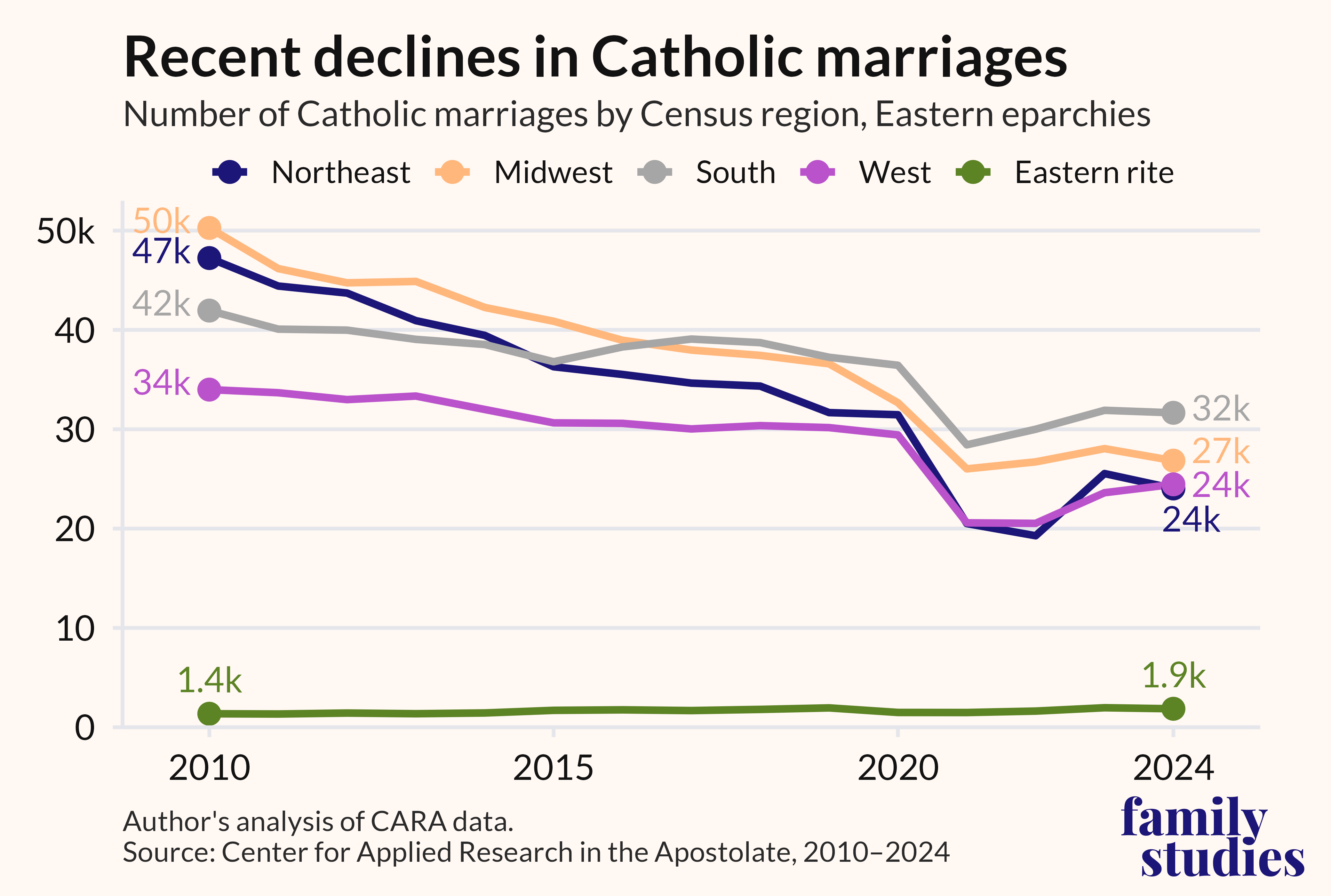
Figure 2: Number of Catholic marriages by region
That decline is also visible among the very Americans historically most receptive to faith: married parents. The share of married parents who attend religious services frequently or occasionally has dropped since the 1970s, as has the share who identify as Catholic or Protestant. In the 1970s, 82% of married parents between 20 and 54 were religious attendees; today that share has fallen to 61%.
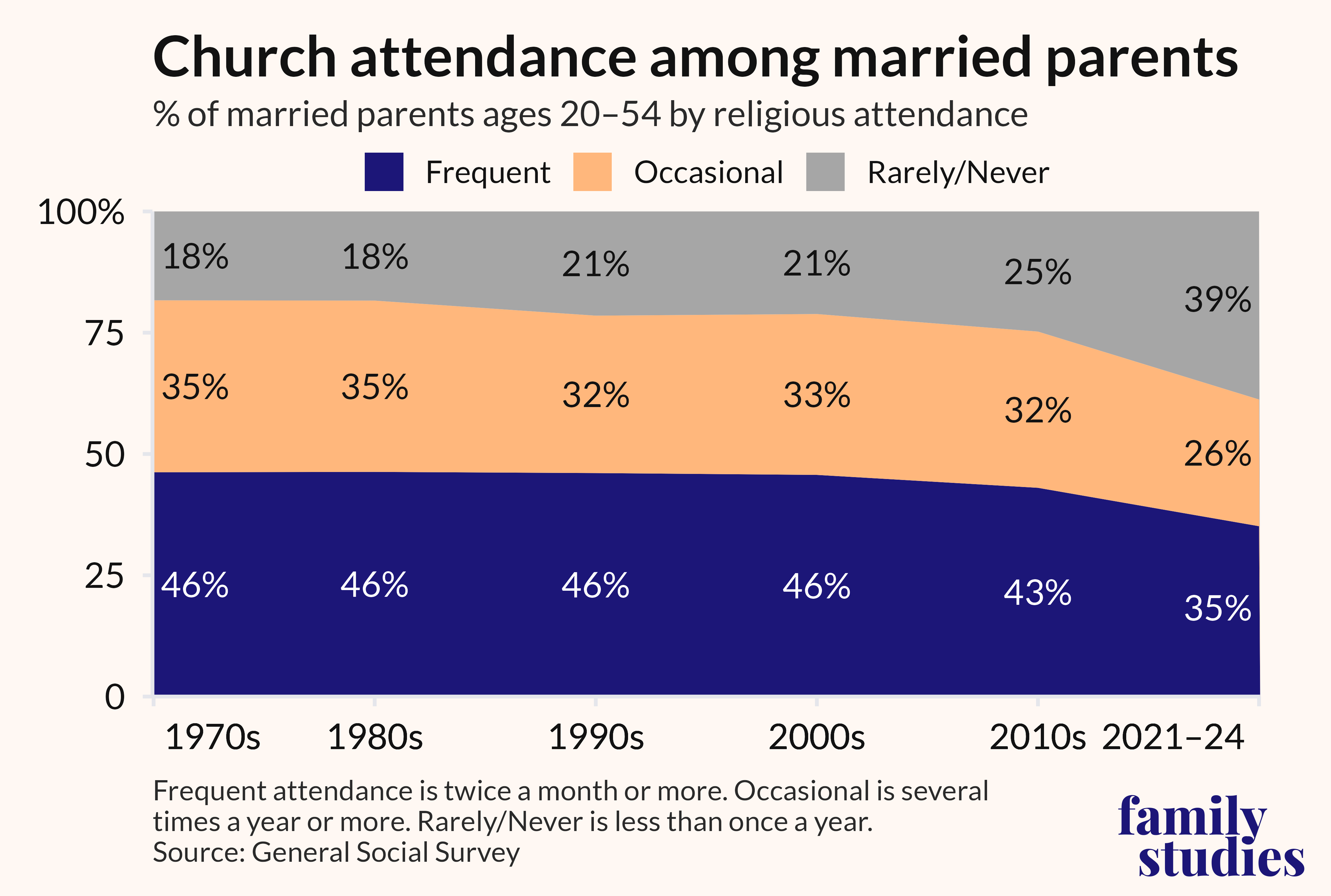
Figure 3: Share of married parents ages 20–54 by frequency of religious service attendance
Likewise, the share of married parents who are Catholic or Protestant has fallen substantially since the 1970s, from 91% to just 61% today. The sharpest declines are visible in recent years. Between the 2010s and the post-COVID era, the share of married parents who rarely or never attend church increased by 57%. The bottom line: faith is less likely to guide American family life than it was a half century ago.
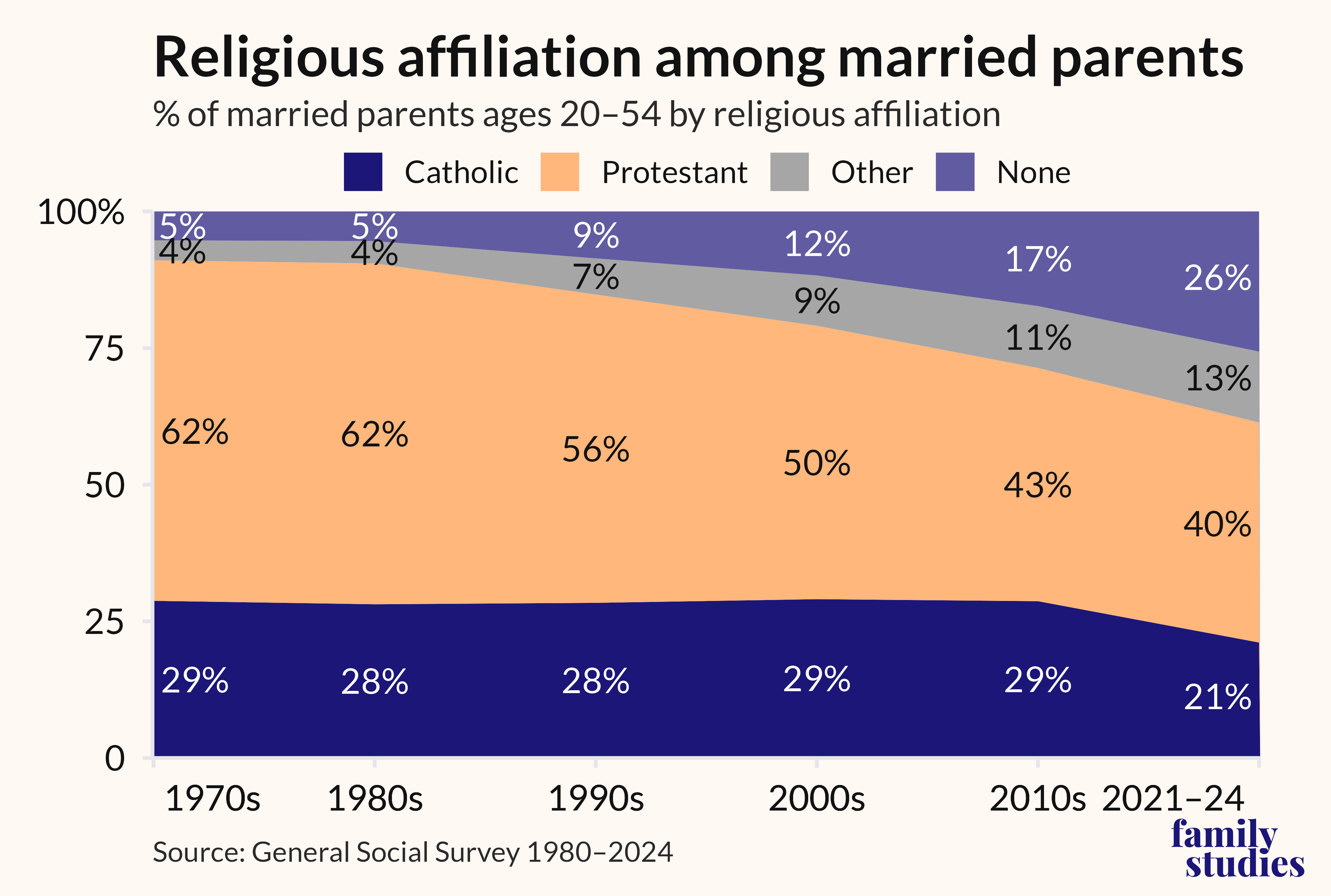
Figure 4: Share of married parents ages 20–54 by religious affiliation
But the paradox of faith and family in America is that even as religious communities’ hold on family life has weakened in general, no group remains more likely to embrace family life than religious Americans. They are more likely to marry, more likely to stay married, and more likely to start a family than their secular peers. In the 1970s, there was an 10-percentage-point gap between the share of religious adults who were married compared with their secular peers. And while both groups have seen declines in marriage, the gap between religious and secular Americans has widened. Today, 60% of religious Americans between ages 20 and 54 are married, compared to 42% of secular adults.
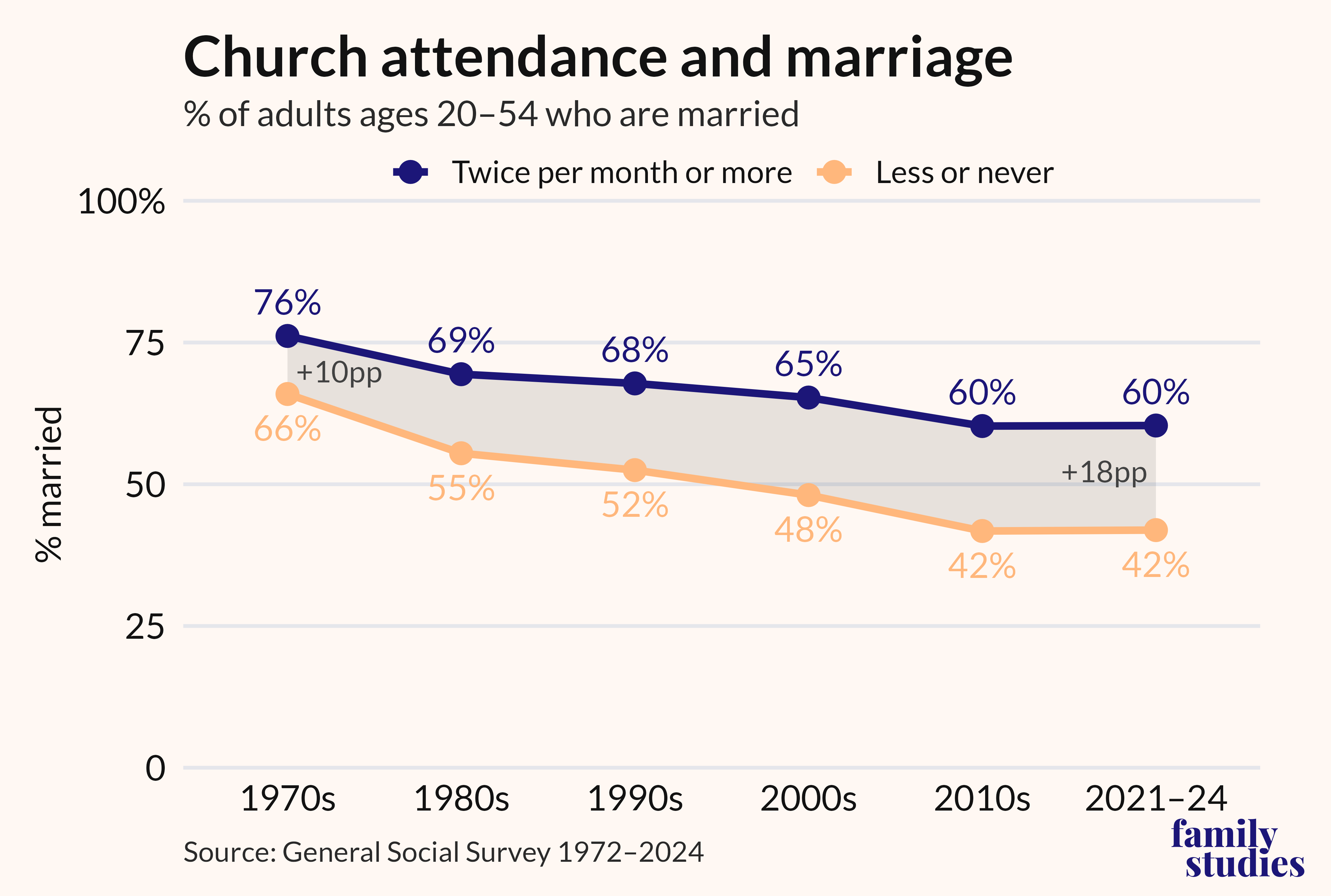
Figure 5: Share of adults ages 20–54 who are married by religious attendance
We see these disparities between adults who identify as Christian, whether Catholic or Protestant, but do not frequently attend church services. For this analysis, we define “nominal” Catholics or Protestants as attending church services less than twice per month. Whereas 57% of churchgoing Catholics and 66% of churchgoing Protestants are married, 47% of nominal Catholics and 41% of nominal Protestants are married. Net of controls for age, education, and race, churchgoing Americans ages 20-54 are 39% more likely to be married than their fellow citizens who are not regular churchgoers.
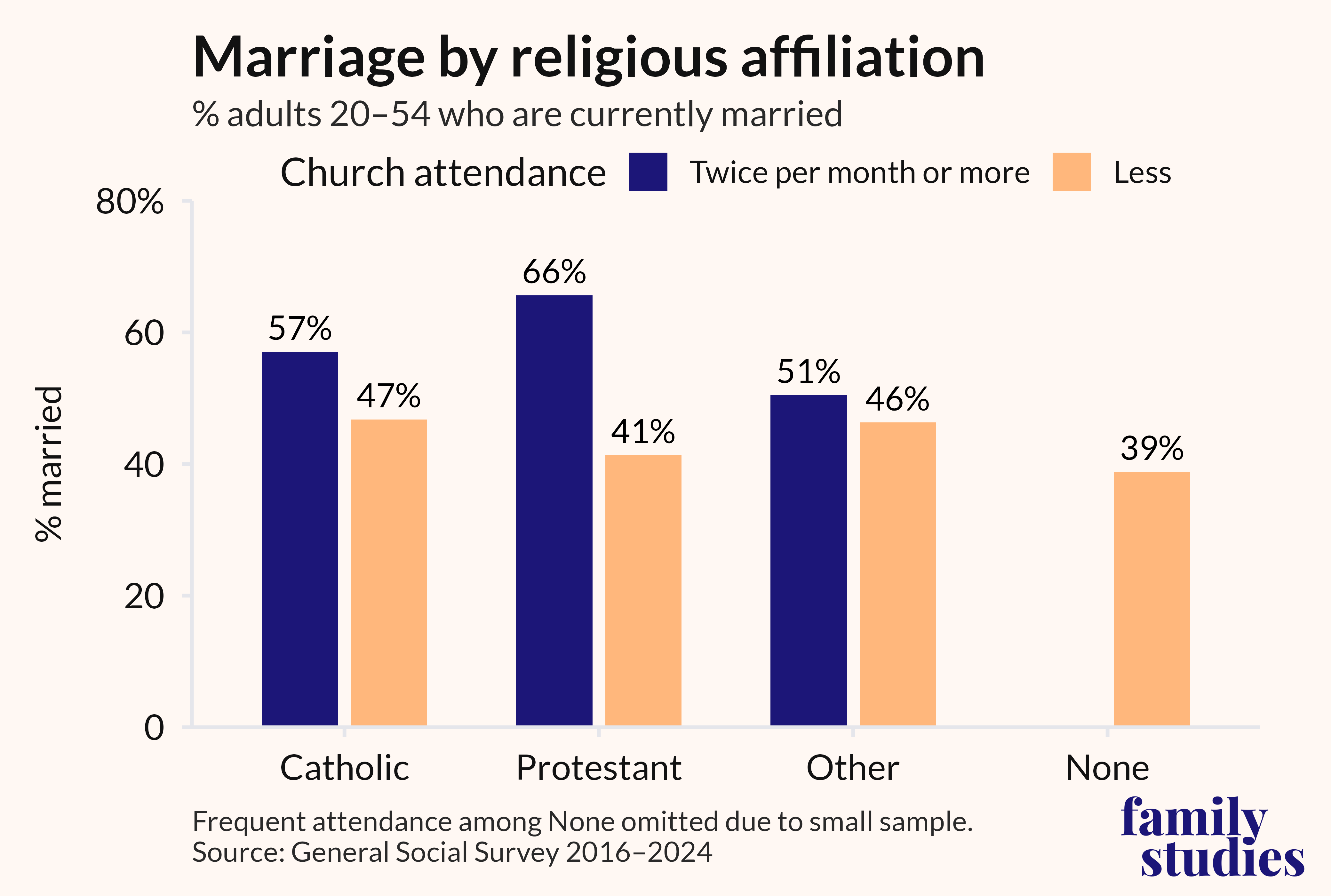
Figure 6: Share of adults ages 20–54 who are married by religious affiliation and church attendance
Frequent church attendees are also more likely to be parents. For example, 71% of churchgoing Catholics ages 20 to 54 are parents, with 51% being married parents and 19% unmarried parents. Catholics who attend Mass less than twice a month are slightly more likely to be unmarried parents.
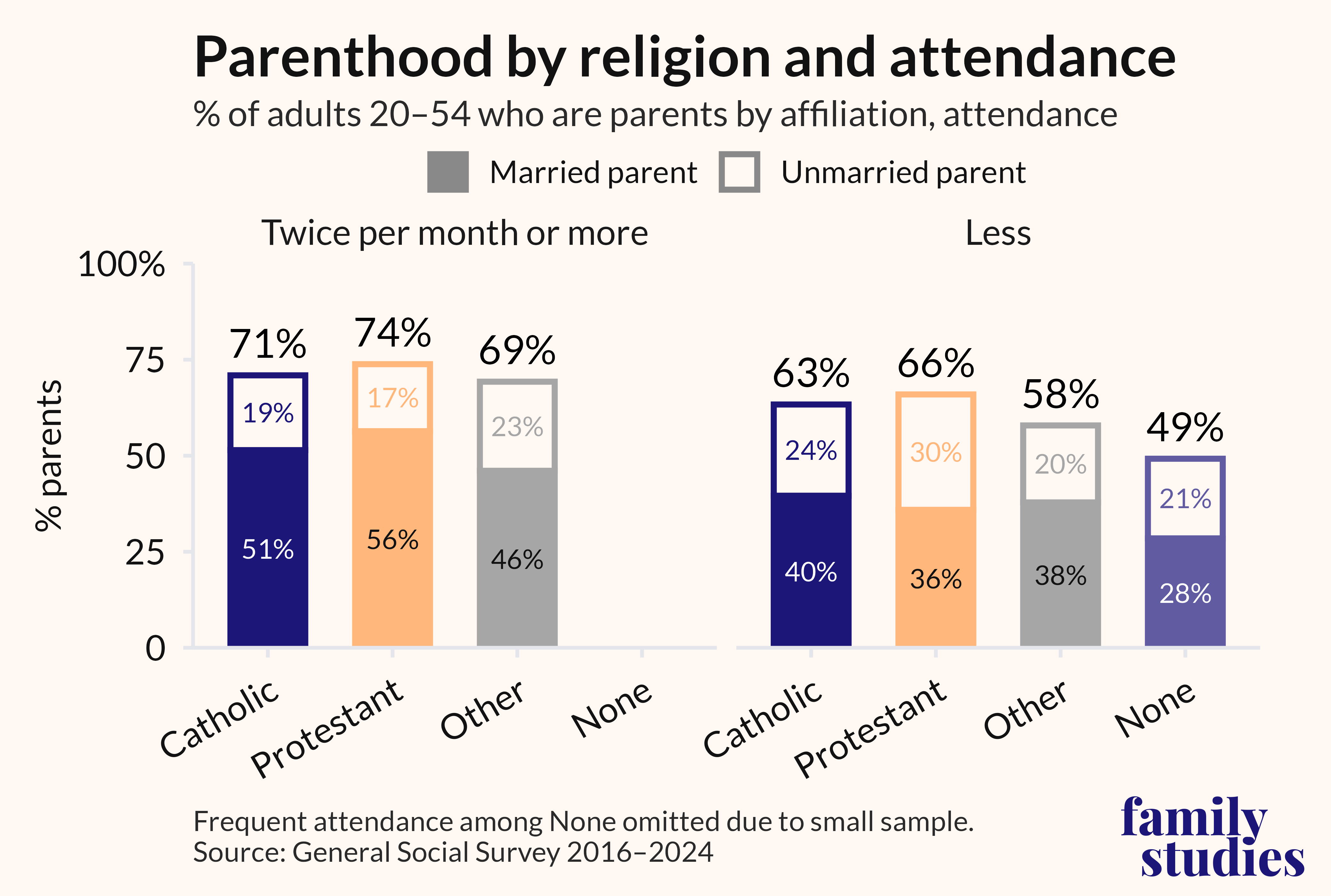
Figure 7: Share adults ages 20–54 who are parents by religious affiliation, as well as marital status
Specifically, 74% of churchgoing Protestants ages 20-54 have kids (56% are married parents, 17% are unmarried parents). This notably contrasts to adults who identify as Protestant but do not frequently attend services, 36% of whom are married parents and 30% of whom are unmarried parents.
In our analysis of the GSS, we find divorce to be highly prevalent among self-identified Protestants who do not frequently attend church services, with 54% of ever-married nominal Protestants ages 35-54 having been divorced or separated. This compares with 34% of ever-married churchgoing Protestants, 27% of churchgoing Catholics, and 36% of nominal Catholics. Furthermore, 40% of those who identified as no religion and who had ever married reported having also been divorced or separated.
Churchgoing Catholics are the least likely of this group to divorce, but this pattern almost certainly also reflects selection effects. Catholics who divorce are probably more likely to leave the faith. But in general, studies suggest that regular churchgoers are between 30 and 50% less likely to divorce, compared to non-religious Americans, net of controls for socioeconomic factors.
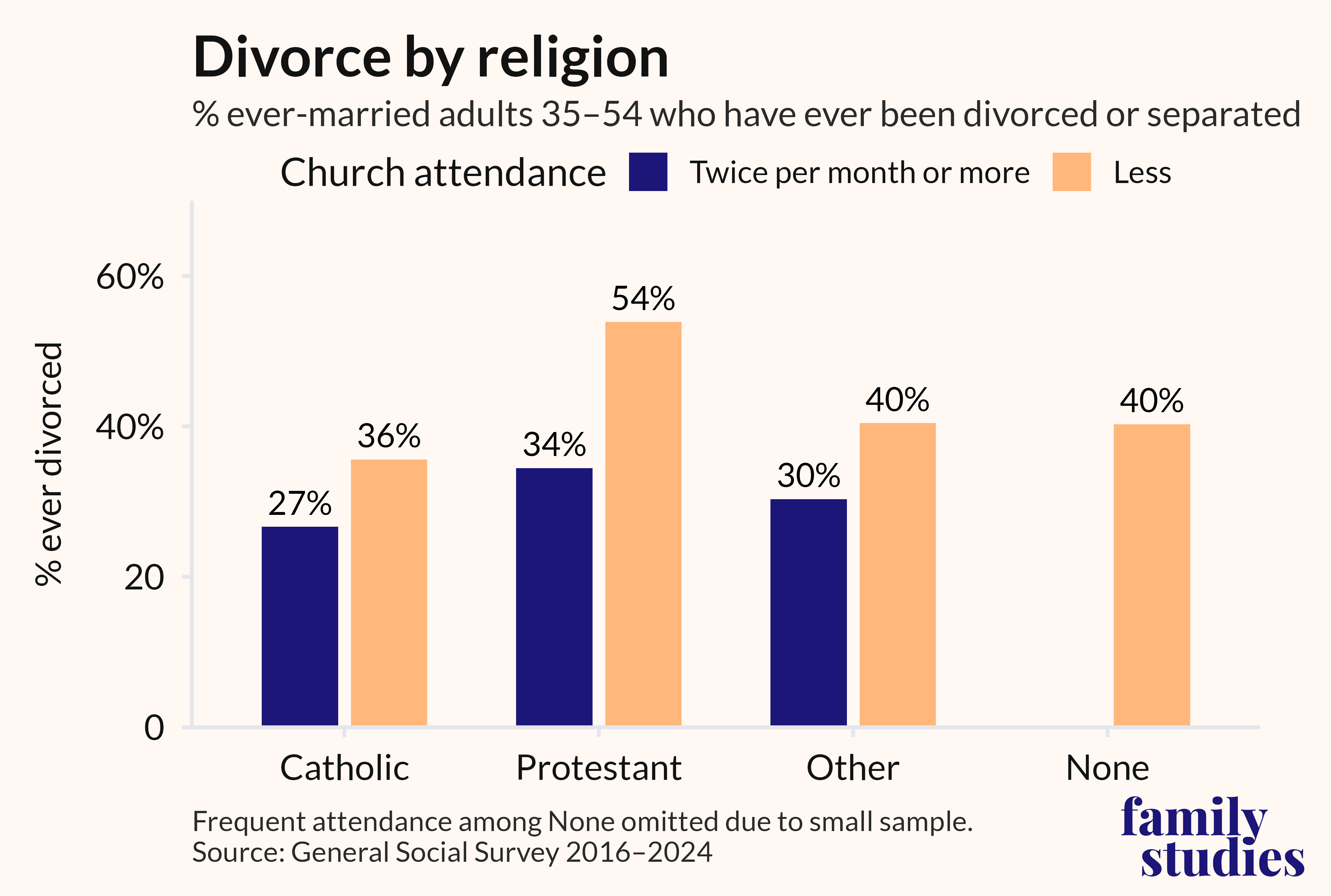
Figure 8: Share of ever-married adults ages 35–54 who have ever divorced by religious affiliation and church attendance
Even as Catholic and Protestant Christians lose ground in the broader national picture, churchgoers within their ranks remain the Americans most likely to be living family-first lives, marked by higher rates of marriage and childbearing, and lower rates of divorce. This is in large part because churchgoing Catholics and Protestants are more likely to embrace the familistic norms, values, and communities conducive to forging strong, stable families.
II. The Difference Faith Makes: Religion and Perceived Stability
But does contemporary faith foster happier marriages? This is an important question, because it is not simply being married that predicts human flourishing; it is the quality of that marriage. Being married, for instance, is linked to a 151% increase in the odds of reporting being “very happy” with life—but being happily married increases those odds by 545 percent. Likewise, children are most likely to thrive when their parents are happily married.
We turn now to exploring the links between religious behaviors, beliefs, and the quality of contemporary marriage.
Marital Happiness and Perceived Stability
Many cultural commentators suggest that freedom from religion—especially from religious rules and mores seen as needlessly restrictive—is the path to living your best life and finding your best love. But when it comes to contemporary marriage, this report reaches the opposite conclusion: religious couples generally report higher levels of marital happiness and stability, and a range of classic practices and beliefs associated with Protestant and Catholic Christianity predict marital success.
Here, we focus on two outcomes: marital quality, measured by self-reported marital happiness, and perceived marital stability, measured by respondents’ confidence that their marriage will last. Marital quality was assessed using the item, “Taking all things together, how would you describe your marriage?” Participants who answered either “very happy” or “extremely happy” were coded as happily married. Relationship Stability was assessed with the item, “In the past 12 months, I have had serious doubts that my relationship will last.” Participants who answered either “mostly disagree” or “completely disagree” were coded as stably married.
Church Attendance
A large body of research finds that the “beliefs, behaviors, and belonging” associated with regular religious attendance are linked to higher-quality marriages. This helps explain why, in the 2026 IFS Religion and Family Survey, churchgoing—defined as attending Mass or church services at least two to three times per month—is associated with higher marital quality. For example, churchgoing husbands (78%) and wives (74%) ages 20 to 54 are more likely to be happy with their marriage compared to non-churchgoing husbands (66%) and wives (63%), as the figure indicates.
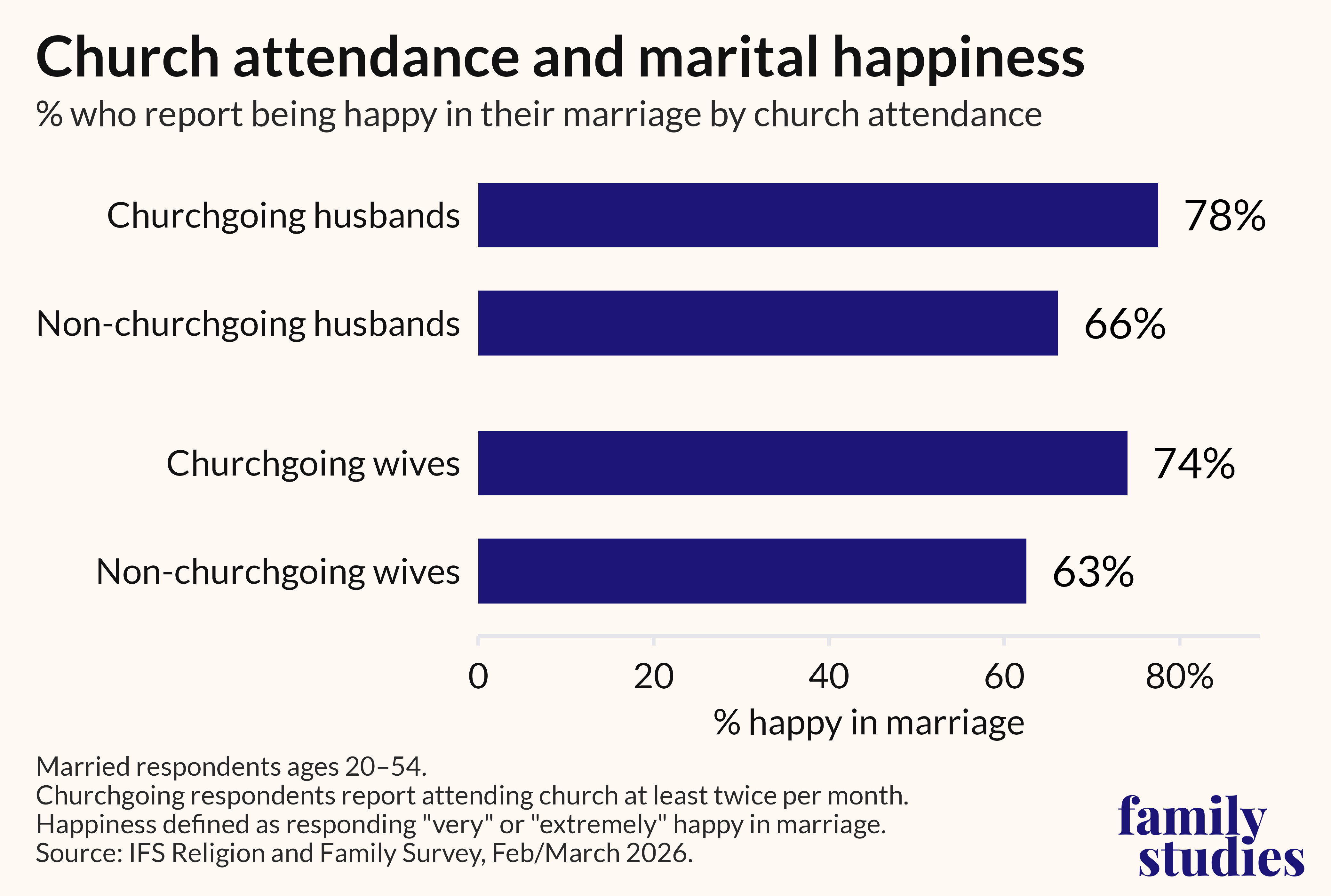
Figure 9: Share of married respondents ages 20–54 who report being happy in their marriages
This churchgoing advantage is evident for both Catholics and Protestants. In fact, Catholic (79%) and Protestant (74%) churchgoers are more likely than every other group to be happily married, including religious “Nones” (66%)—a pattern that holds even after accounting for education, race, age, and sex. Neither nominal Catholics nor nominal Protestants enjoy a significant happiness advantage over Nones, implying that it is active church participation, not merely affiliation, that produces happier marriages. Net of controls, churchgoers have 1.49 times higher odds of being happily married, compared to non-religious spouses.
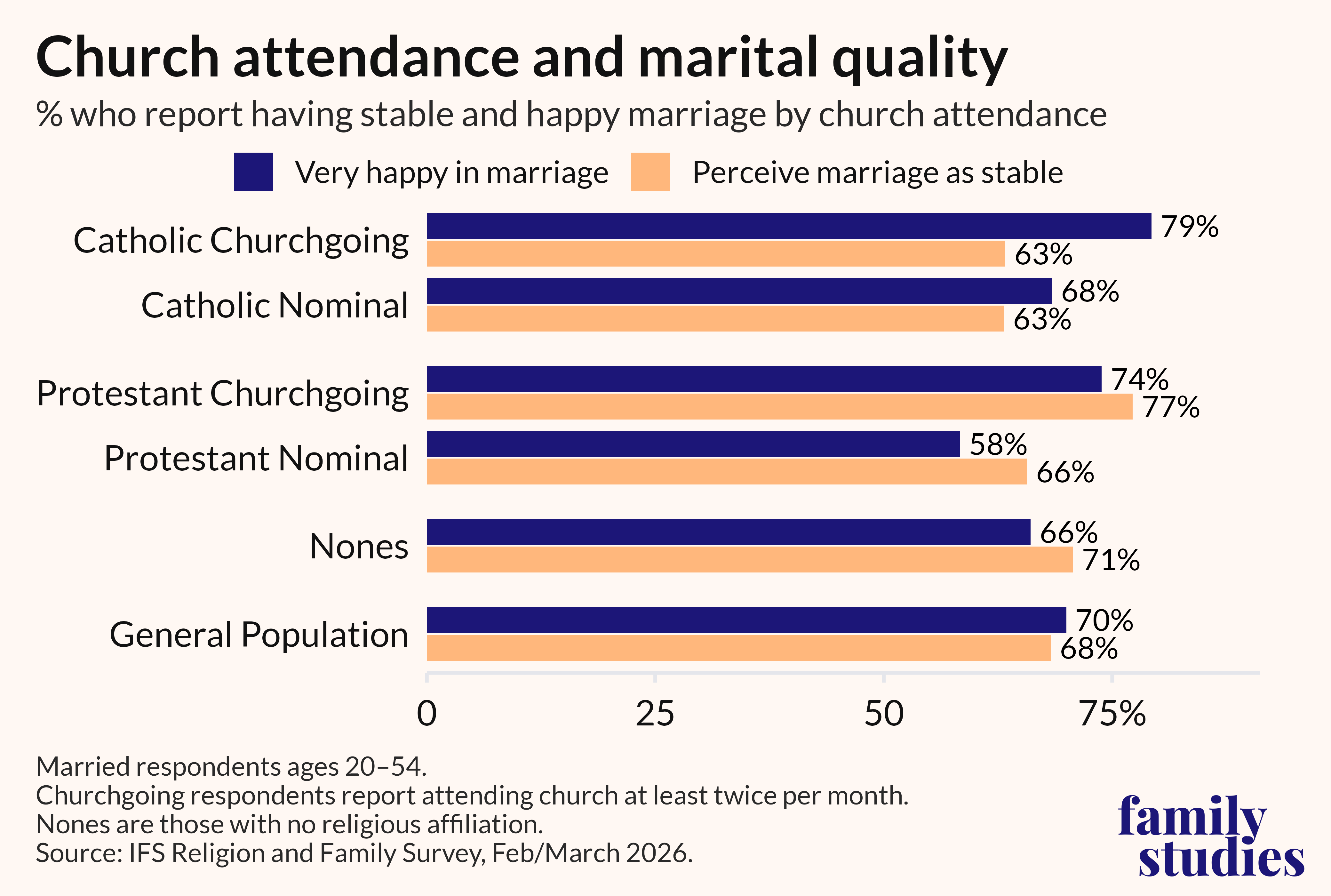
Figure 10: Share of married respondents ages 20–54 who report being happy and stable in their marriages
Notably, this advantage in marital happiness does not extend to perceived marital stability for Catholics. While 77% of churchgoing Protestants report being in stable marriages, only 63% of churchgoing Catholics say the same—even lower than the 71% of Nones. After controlling for age, race, sex, and education, the pattern persists. On this measure, Catholics appear to divorce less but worry about marital stability more.
Prayer
For both Catholics and Protestants, prayer is associated with happier, more stable marriages. Prayer tends to endow family life with a sense of sacredness, encourage constructive reflection on family relationships, and motivate investment in those relationships—all of which redound to the benefit of marriage. For example, 67% of Catholics who pray daily report being in a stable marriage, versus just 60% of Catholics who do not pray daily. Among Protestants, 77% of those who pray daily report a stable marriage, compared to 66% of those who pray less than daily. More broadly, Americans who pray daily have 1.48 times higher odds of reporting a stable marriage and 1.50 times higher odds of reporting a happy one, compared to peers who pray infrequently or not at all.
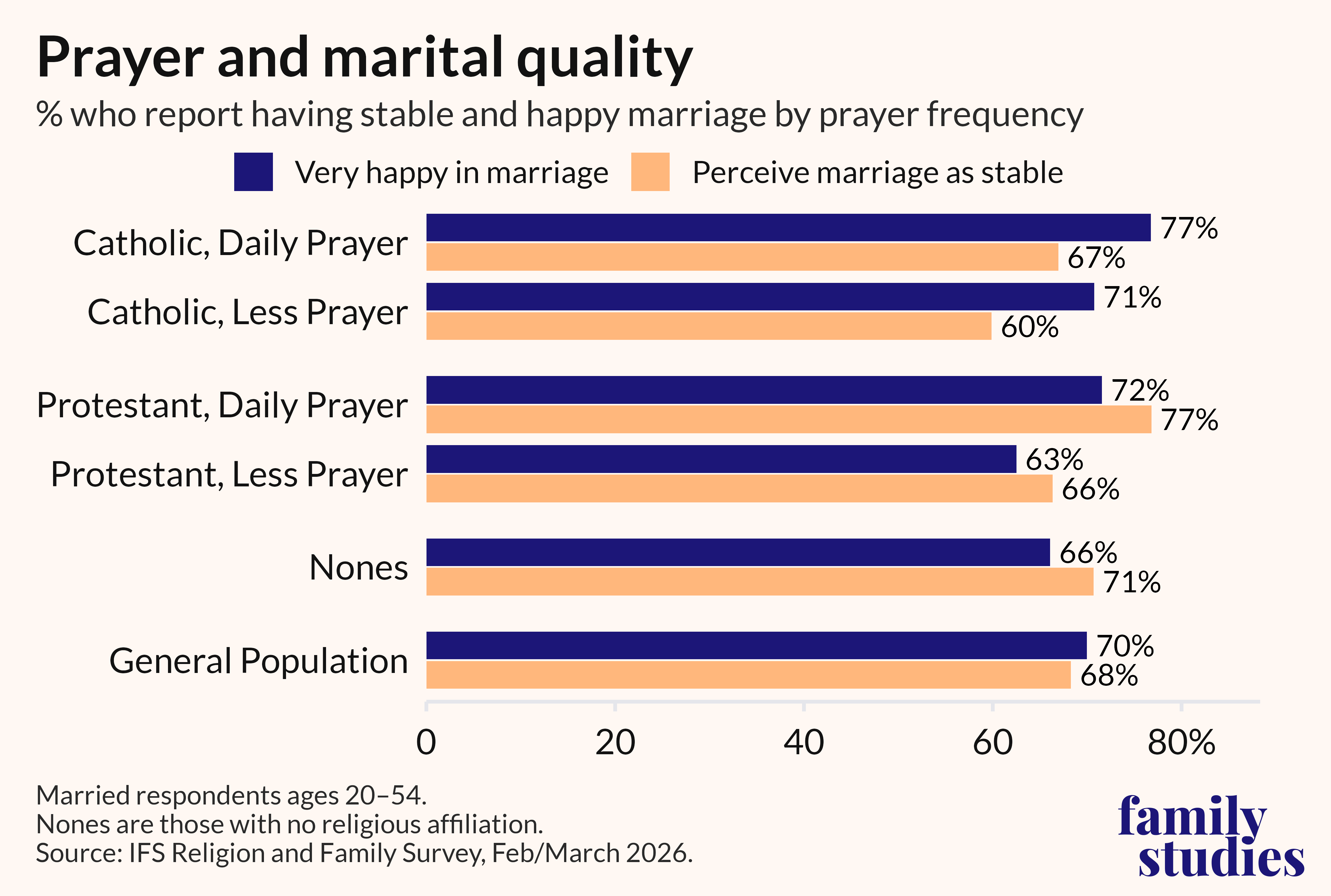
Figure 11: Share of married respondents ages 20–54 who report being happy and stable in their marriages by frequency of prayer
Faith and Value Alignment
Most Americans do not believe that sharing similar moral and religious views matters much for forging a strong, stable marriage. For example, a Pew Research poll found that only 48% of adults considered shared moral and religious beliefs “very important” in choosing a partner. But our YouGov survey suggests the minority view is the correct one: Husbands and wives who share a common faith and similar values are markedly happier. Value alignment—defined here as being completely or mostly aligned on matters such as faith and religion, work-family roles, openness to having children, how to raise children, and vision for the future—is a significant predictor of both relationship satisfaction and relationship stability.
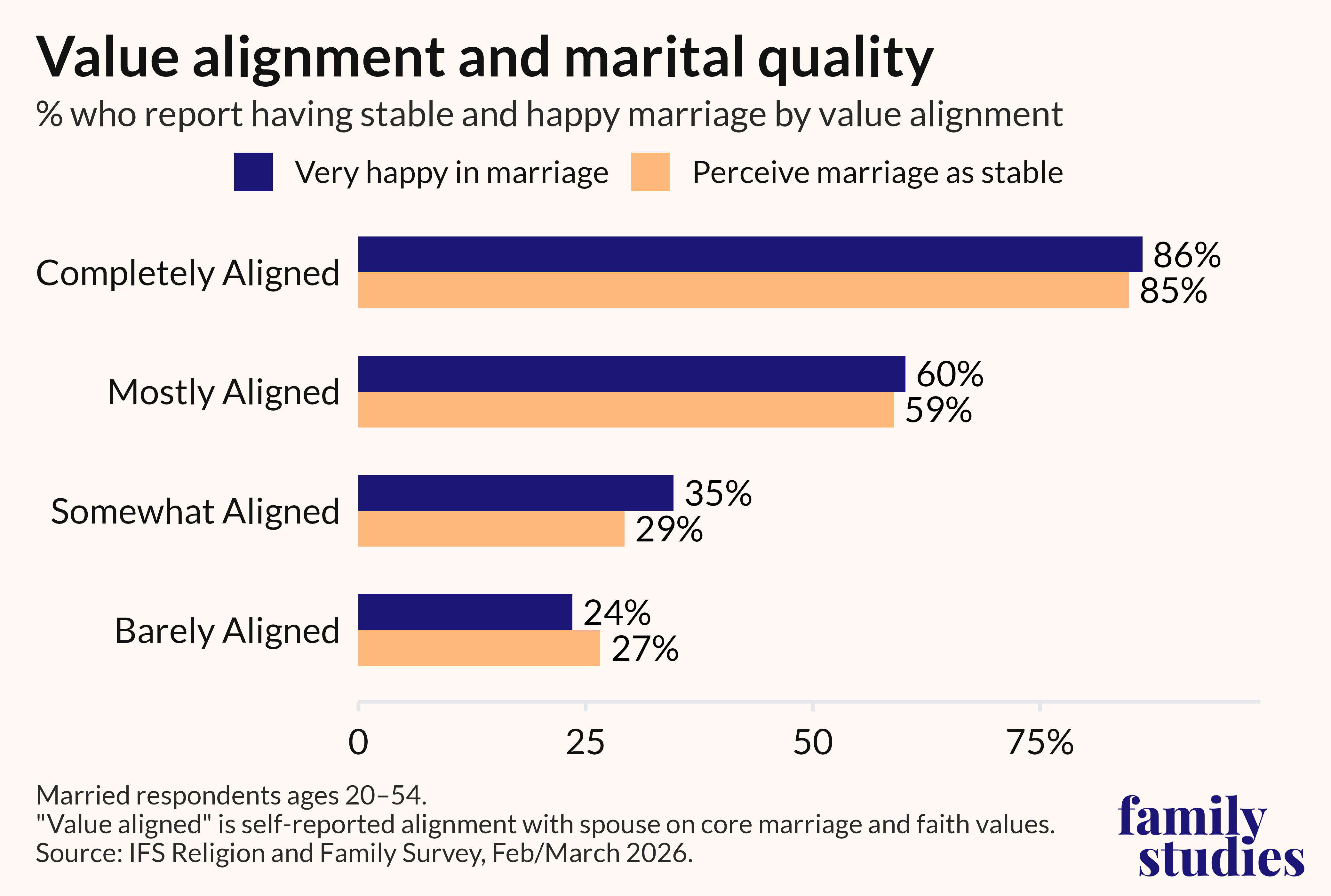
Figure 12: Share of married respondents ages 20–54 who report being happy and stable in their marriages by value alignment
Broken down by religious affiliation and alignment, the differences between aligned and non-aligned couples are striking. Among Catholics, 79% of the value-aligned report being happily married, versus just 38% of the non-aligned. Among Protestants, 73% of the aligned are happily married, versus just 18% of the non-aligned. A similar pattern holds for relationship stability: aligned Catholics (69%) report markedly higher stability than non-aligned Catholics (27%) as do aligned Protestants (77%) versus non-aligned Protestants (25%). Net of controls, spouses with shared values have 6.86 times higher odds of perceived marital stability and 6.85 times higher odds of being happily married than their non-aligned peers. These are very large differences in marital quality.
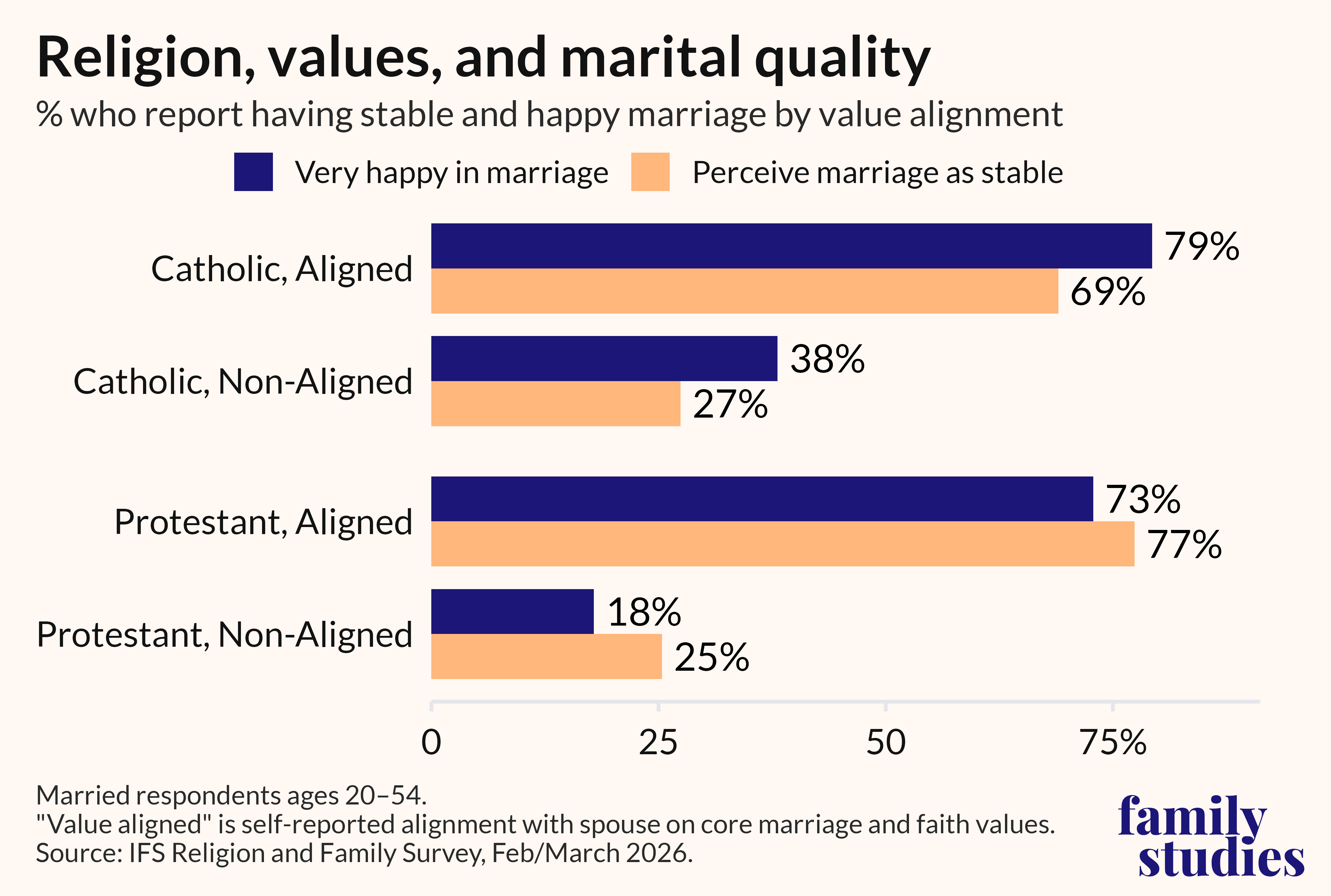
Figure 13: Share of married respondents ages 20–54 who report being happy and stable in their marriages by value alignment
Beliefs About Marital Permanence
Commitment is one of the strongest predictors of marital quality and stability. Husbands and wives who embrace a “till death do us part” ethic fare markedly better in the 2026 IFS Religion and Family Survey. We coded complete agreement with the statement “Marriage is a permanent bond; thus, divorce is not acceptable except in extreme cases (e.g., domestic violence)” as an endorsement of marital permanence. Churchgoing Protestants (52%) and churchgoing Catholics (39%) are most likely to hold this view, compared to just 26% of nominal Protestants, 21% of nominal Catholics, and 6% of Nones.
Husbands and wives who embrace marital permanence are markedly more likely to be happily and stably married. Among those who endorsed permanence, 83% of Catholics and 74% of Protestants are happily married, compared to 70% of Catholics and 64% of Protestants who did not. The same holds for marital stability. Overall, spouses who endorse marital permanence have 1.85 times higher odds of being highly satisfied in marriage and 1.81 times higher odds of perceiving their marriage as stable, net of controls for education, race, age, and sex. The classic Christian view of marriage as a permanent commitment is clearly tied to stronger, more stable marriages for today’s husbands and wives.
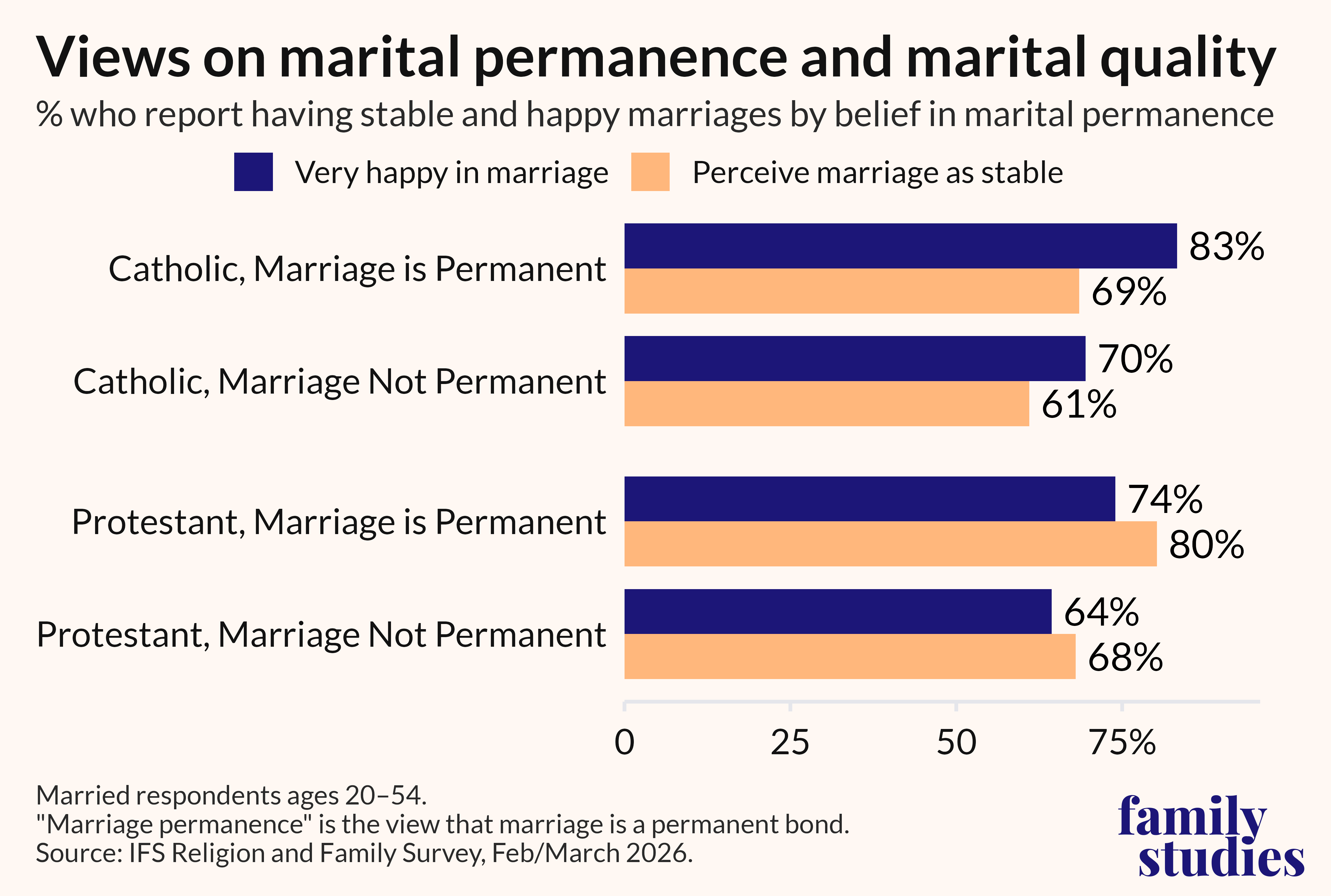
Figure 14: Share of married respondents ages 20–54 who report being happy and stable in their marriages by belief in marital permanence
III. More Faith, Better Sex
Religion—and especially the norms that direct and constrain sexual activity in many religious traditions—is often depicted as an obstacle to a good sex life. Mainstream media, popular culture, and even academic research are rife with the idea that religious faith is an obstacle to good sex. This narrative discounts the vital role that meaning, virtue, and value alignment play in building sexual intimacy.
Our results show the opposite: religious married couples are outperforming their secular peers when it comes to sex. We explore the link between religion and sex in the IFS Religion and Family Survey through two measures: sexual frequency (“About how often did you have sex during the past 12 months?”) and sexual satisfaction (“How would you rate your overall sex life these days?”). We also analyze trends in sexual frequency in the GSS.
Sex, Church Attendance, and Prayer
America is now in the grip of a “sex recession,” in which only a minority of adult men and women have sex at least once a week, down from a clear majority in 2000. Strikingly, this recession has largely spared churchgoing husbands and wives. GSS data show that 64% of married Americans ages 20–54 had sex at least weekly in the 1990s, whereas only 54% do today. But these trends differ by religiosity. In the 2000s, 64% of regular churchgoers who were married had sex at least weekly, compared to 61% of husbands and wives who were not religious. Today, only 48% of those who are not religious have sex at least weekly, versus 62% of those who are regular churchgoers in that same age group. So, there is a growing religious-secular divide in married sex—and it favors religious couples.
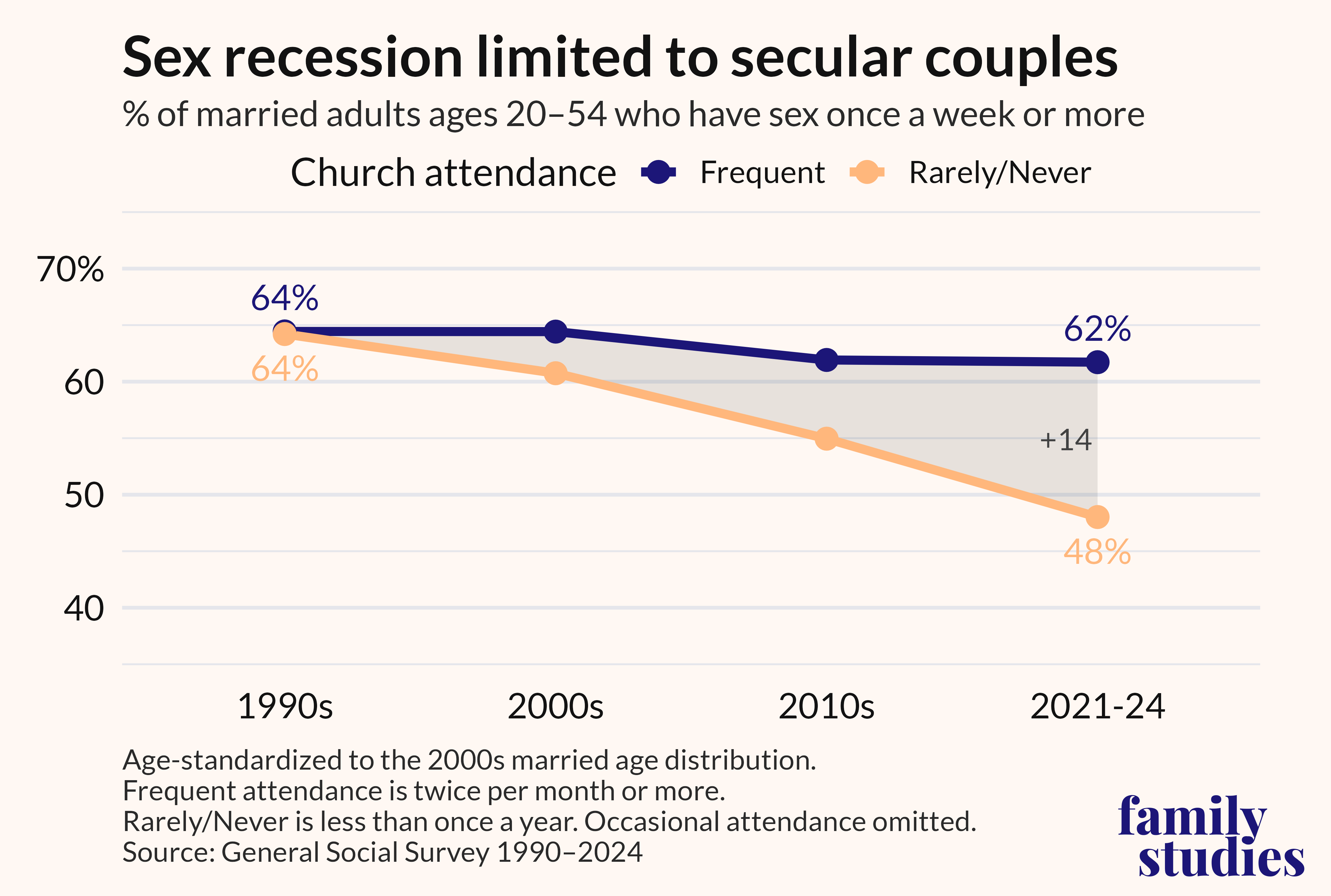
Figure 15: Share of married respondents ages 20–54 who report weekly sex
Similar patterns appear in the 2026 IFS Religion and Family Survey. Churchgoing Catholics and Protestants show a clear frequency advantage: 69% of Catholic churchgoers reported having sex at least weekly, versus 60% of nominal Catholics; 60% of churchgoing Protestants, versus 52% of nominal Protestants; and just 47% of Nones. Net of controls for education, race, and age, churchgoers had 1.49 times higher odds of having weekly sex than married peers who do not regularly attend religious services.
The religious advantage extends to sexual satisfaction as well. Among churchgoers, 55% of Catholics and 45% of Protestants report being satisfied with their sex lives. (i.e., rating one’s sex life as “excellent” or “very good”), compared to just 45% of nominal Catholics, 35% of nominal Protestants, and 40% of Nones. Net of controls, churchgoers have 1.42 times higher odds of being sexually satisfied than non-churchgoers.
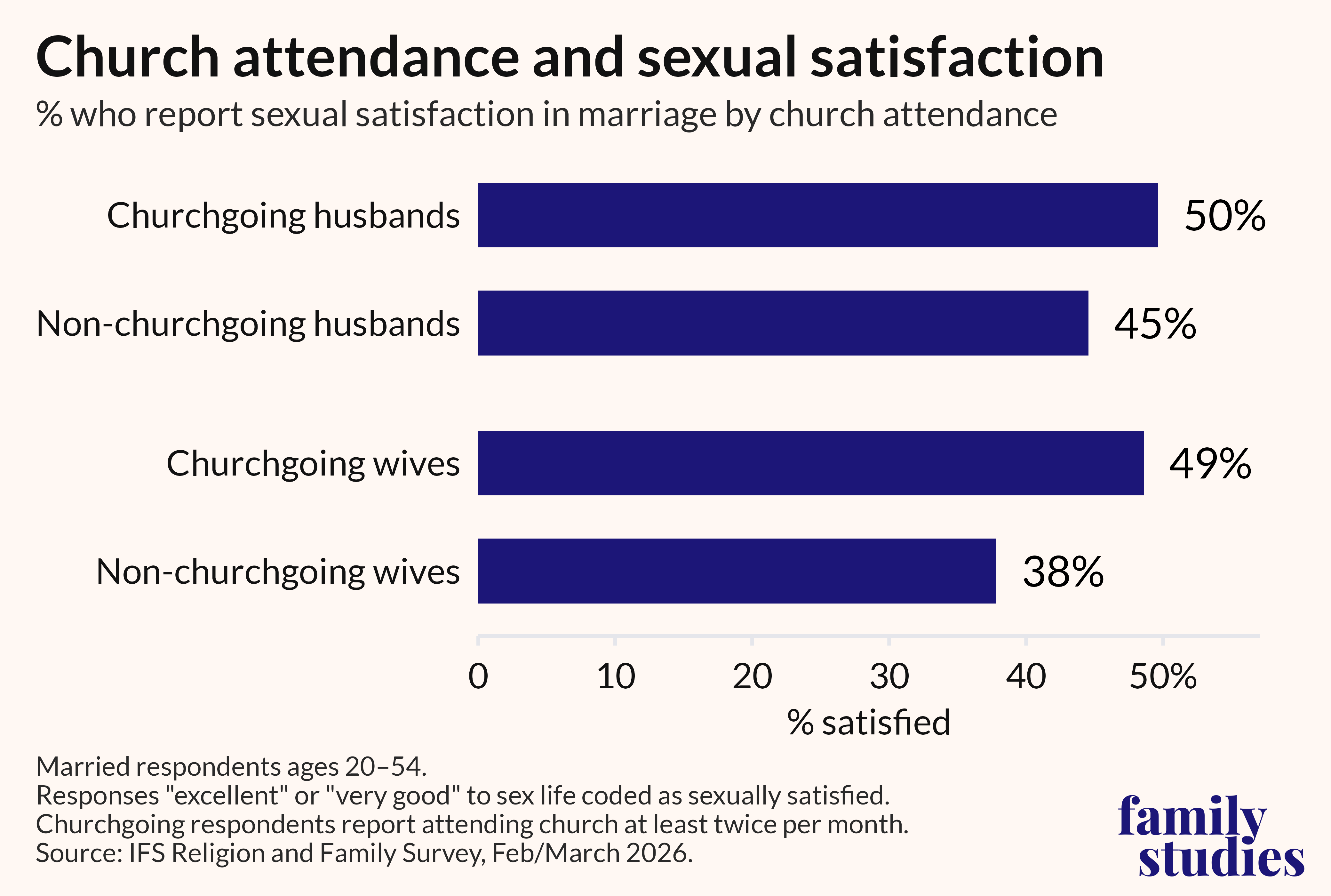
Figure 16: Share of married respondents ages 20–54 who report sexual satisfaction by church attendance
The religion-and-sex story applies to both sexes. Sexual satisfaction is higher for both churchgoing husbands and wives, compared to their peers who attend infrequently or not at all.
Overall, churchgoing Catholics are the most likely of any group to report frequent sex and sexual satisfaction, while Nones scored significantly lower than nearly every other group on both measures. The cultural trope of the sexually prudish, frustrated religious American does not fit the data.
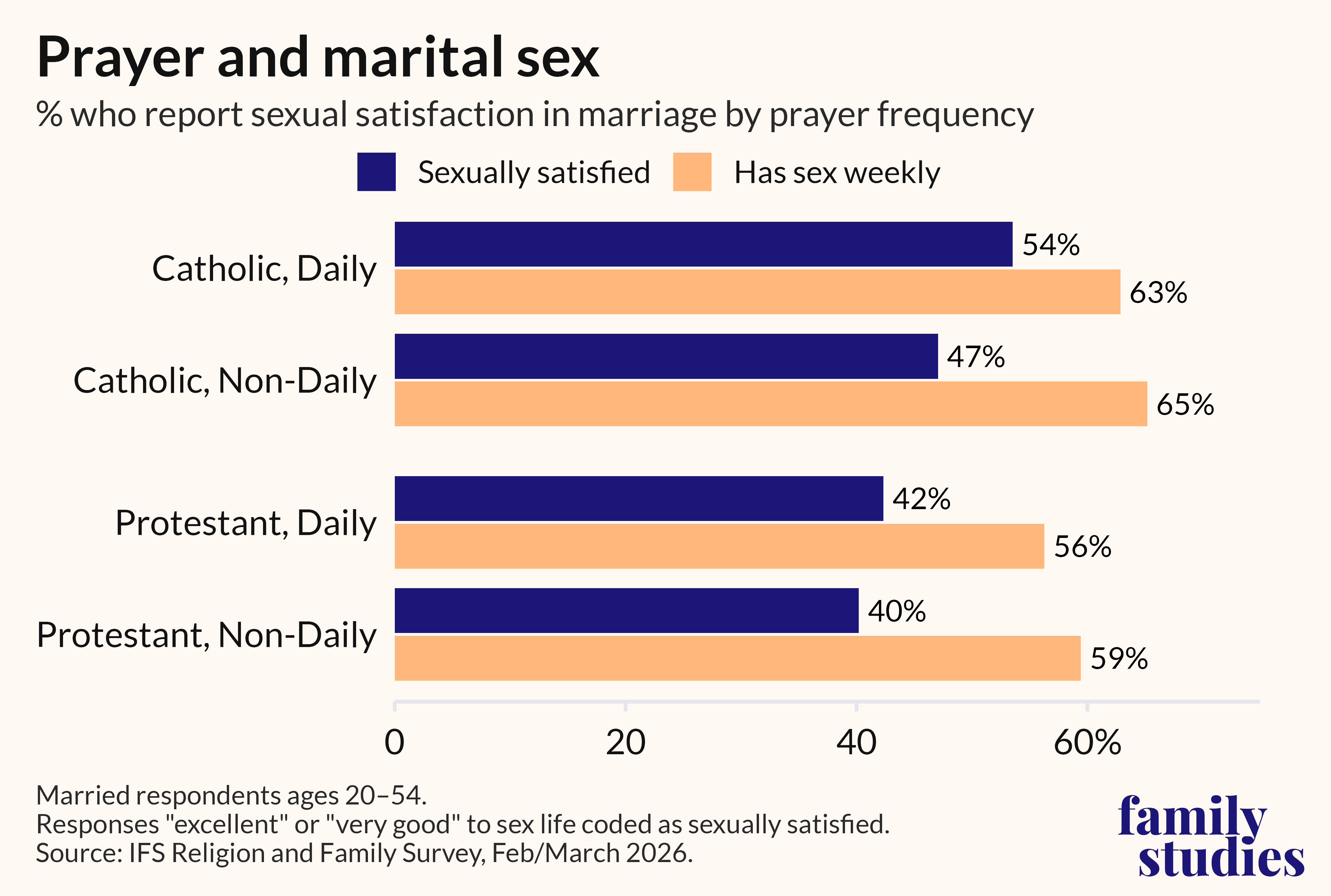
Figure 17: Share of married respondents ages 20–54 who report having sex 1+ times per week and sexual satisfaction by prayer frequency
What about religious rituals specifically? Daily prayer is not a significant predictor of frequent sex for either Protestants or Catholics. Catholics who pray daily, however, report significantly higher sexual satisfaction than every other group: 1.71 times higher odds than Protestants who pray daily, and 1.49 times higher odds than Catholics who do not pray daily. Taken together, Catholics and Protestants who pray daily have 1.29 times higher odds of sexual satisfaction than those who do not.
All of this suggests that endowing marriage—and even sex—with a sense of sacredness is a strong predictor of sexual satisfaction. The bottom line: religious behaviors like frequent church attendance and prayer appear to foster a robust sense of communion and commitment that extends to the benefit of the bedroom.
Sex and Marital Permanence Beliefs
Beliefs on the permanence of marriage are also linked to sexual frequency and satisfaction. Catholics and Protestants, for instance, who believe marriage is a permanent commitment are more likely to be sexually satisfied than their counterparts who do not hold this view (60% versus 46% for Catholics, with a smaller 43% versus 40% difference among Protestants). Belief in marital permanence is a statistically significant predictor of both sexual frequency and satisfaction: spouses who endorse it have 1.31 times higher odds of reporting weekly sex and 1.53 times higher odds of reporting sexual satisfaction, net of controls for age, sex, race, and education. Belief in marital permanence is in fact a stronger predictor of sexual satisfaction than either church attendance or prayer.
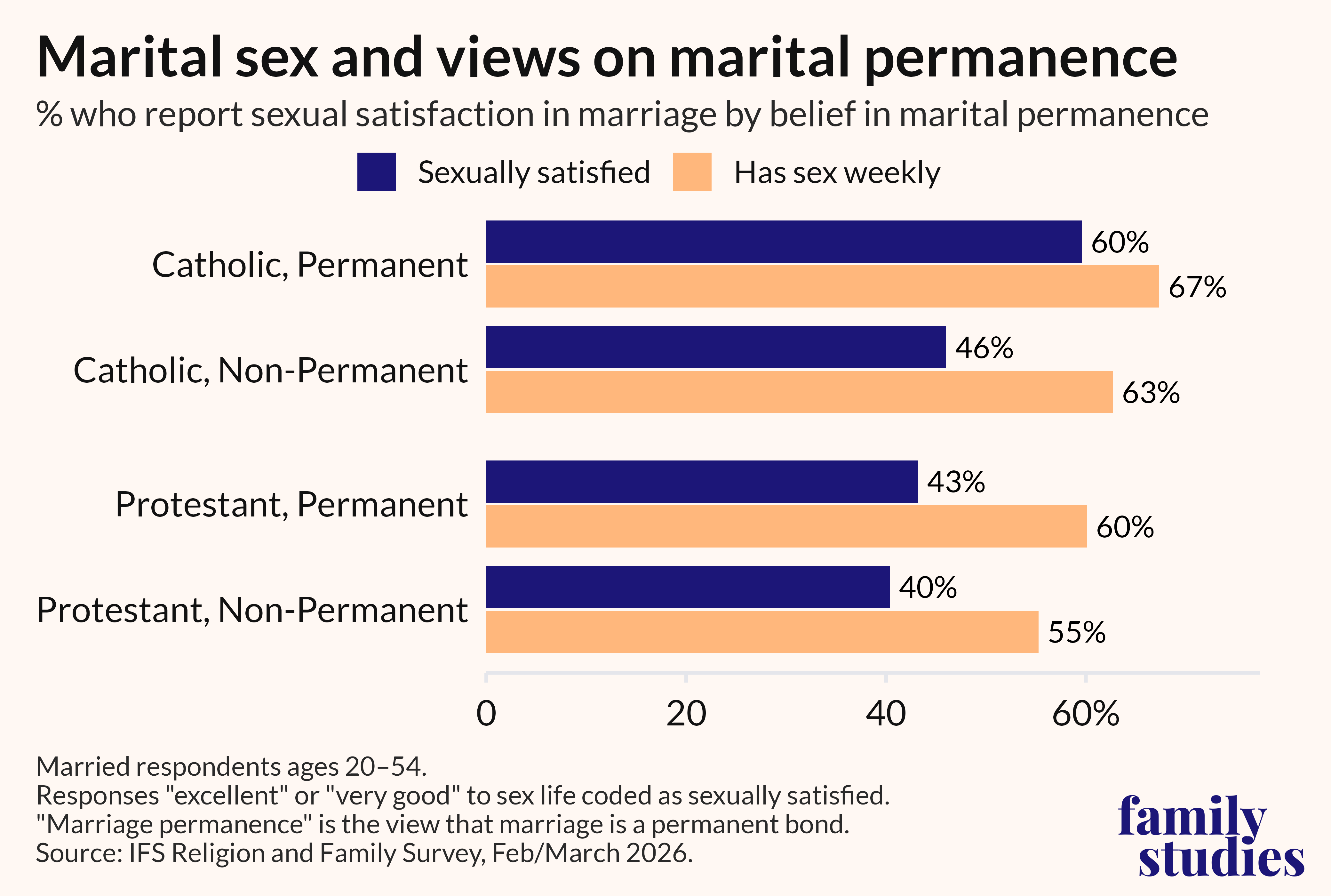
Figure 18: Share of married respondents ages 20–54 who report having sex 1+ times per week and sexual satisfaction by belief in marital permanence
The Catholic Catechism describes sex as a “complete gift of self.” It makes sense, then, that spouses who view their marriage as permanent are more willing, and more satisfied, in their sex lives—free to give that gift joyfully to the person to whom they have committed for life. Indeed, the evidence suggests that mutual commitment, by fostering greater investment, trust, and emotional security, functions as a powerful aphrodisiac.
Sex, Catholic Teachings, & Sacraments
In his book Faithful Attraction, priest and sociologist Andrew Greeley observed that “romance and religion” tend to go together. His insight holds up today: Catholics who embrace classic Church teachings—such as the True Presence of Christ in the Eucharist and openness to life (the belief that sex should be open to life)—are also more likely to report a good sex life.
In the 2026 IFS Religion and Family Survey, adherence to Catholic teachings is generally associated with higher sex frequency and greater satisfaction. Catholics who are open to having children and who affirm the True Presence report both higher sexual satisfaction and more frequent sex than Catholics who do not hold these beliefs, though net of controls, only openness to life reached statistical significance. Catholics open to life have 1.69 times higher odds of sexual satisfaction than those who are not.
Religion, then, is not typically an obstacle to a good sex life. In fact, it appears to be an asset. On average, husbands and wives who attend church regularly, pray often, and embrace their faith’s classic teachings—including “‘til death do us part” —have more, and better, sex than their peers.
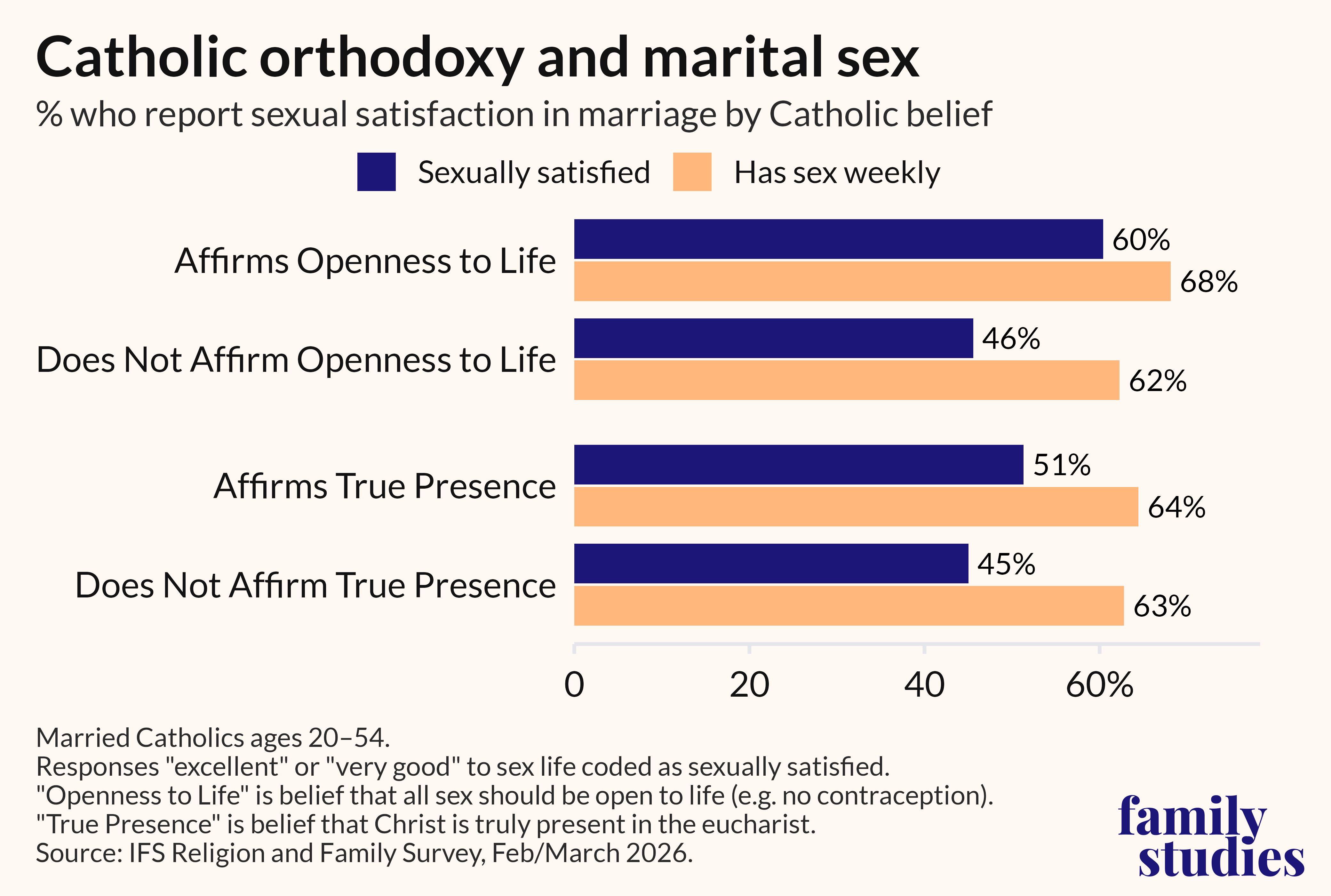
Figure 19: Share of married Catholics ages 20–54 who report having sex 1+ times per week and sexual satisfaction by Catholic belief
IV. Strongest Predictors of Marital Satisfaction and Stability for Christians
Of the religious factors in our survey, which ones best predict marital satisfaction and perceived stability for both Catholics and Protestants? The strongest predictors of marital satisfaction are value alignment, belief in marital permanence, and social support (that is, receiving a high degree of support from family, friends, neighbors, or one’s church community). Value alignment is the single strongest predictor: value-aligned spouses have a 78% probability of being in a happy marriage, versus just 36% for non-aligned spouses.
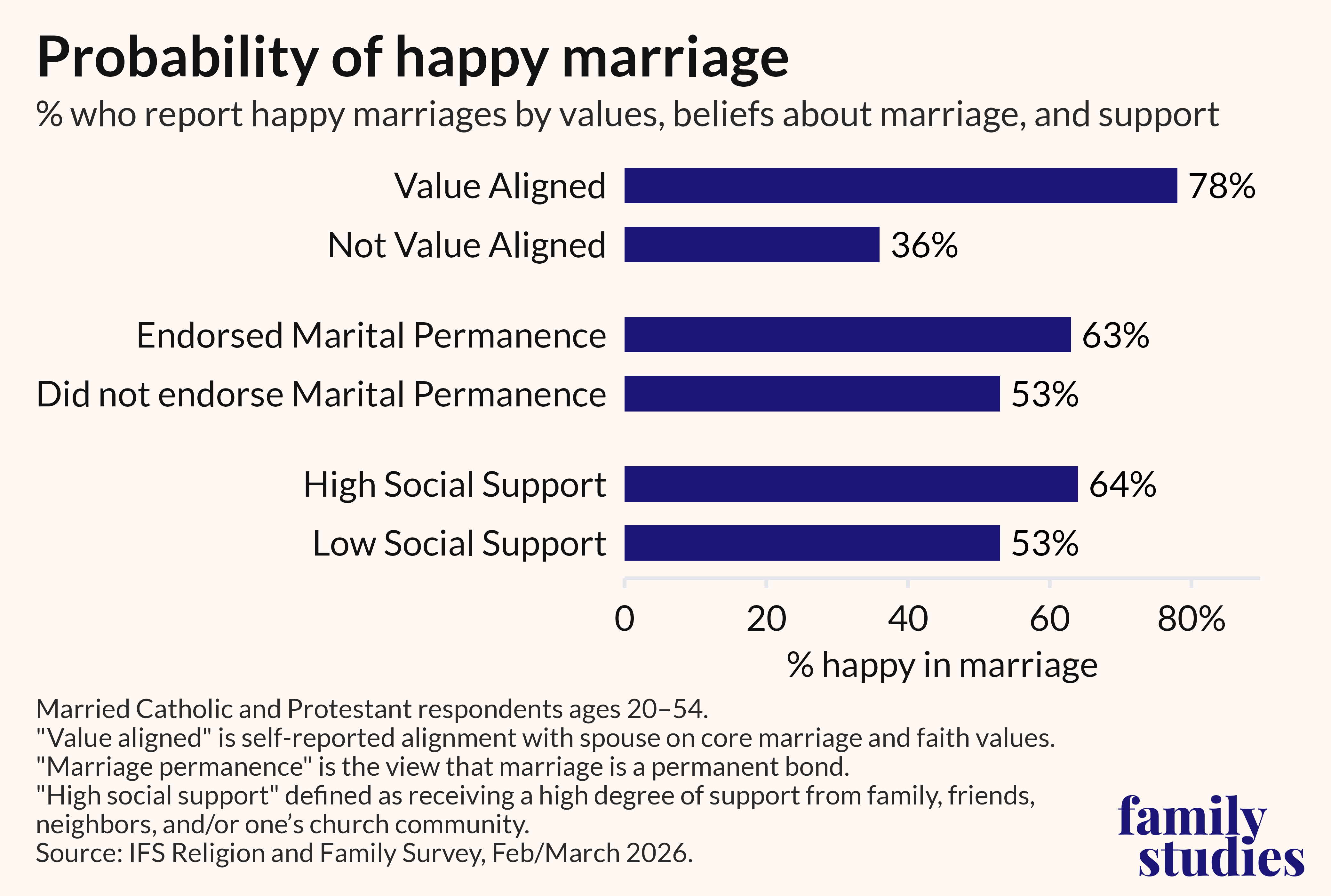
Figure 20: Predicted probabilities of happy marriage for Catholics and Protestants ages 20–54 by values, beliefs, and support
Value alignment and belief in marital permanence are also the strongest predictors of marital stability, followed by daily prayer. Taken together, shared beliefs, commitment, community, and regular prayer appear especially important for fostering strong marriages.
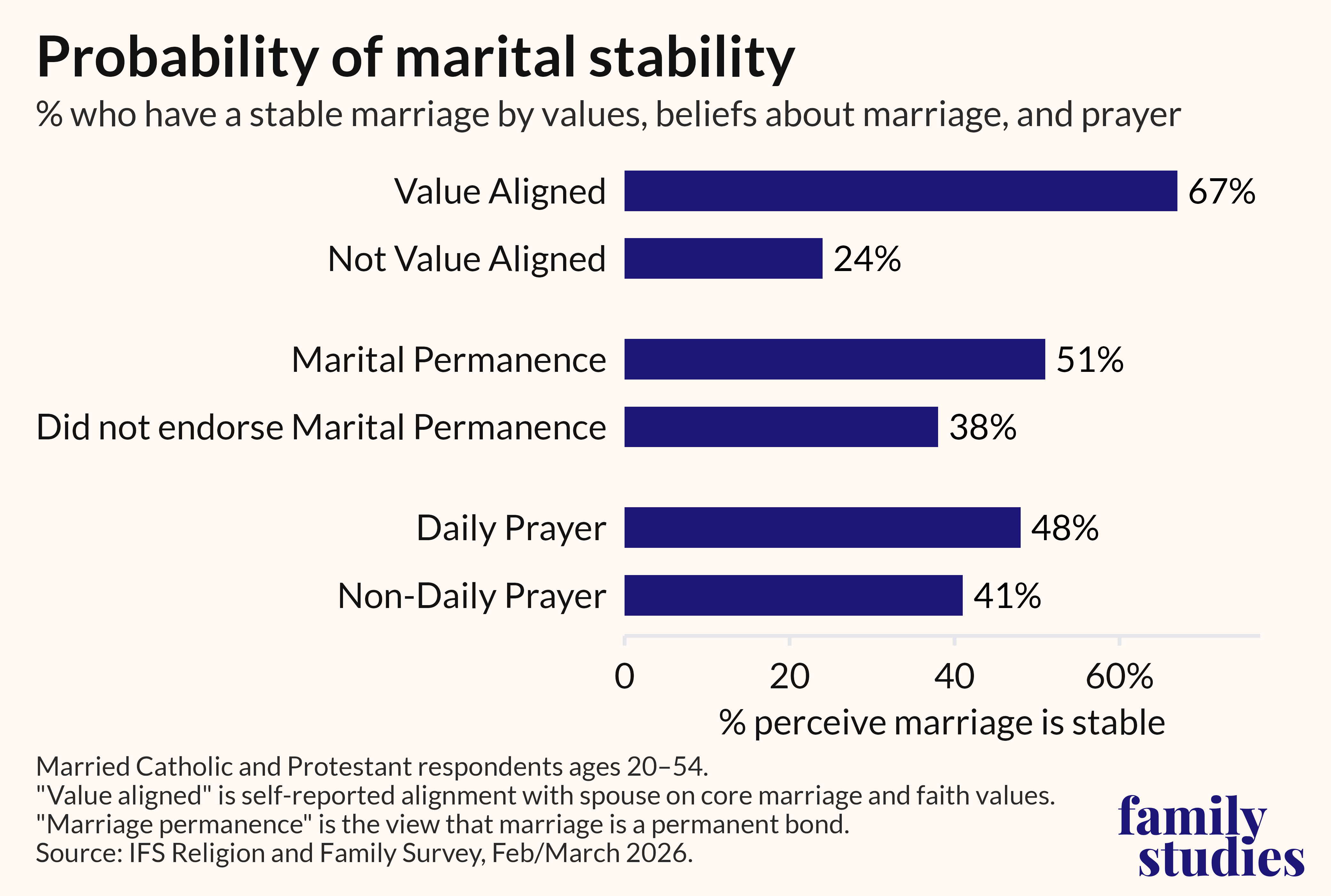
Figure 21: Predicted probabilities of marital stability for Catholics and Protestants ages 20–54 by values, beliefs, and prayer
Relational Fairness: A Crucial Factor
Fairness between spouses is consistently linked to positive marital outcomes, and in the IFS Religion and Family Survey, it emerges as one of the strongest predictors of both marital satisfaction and stability in this study.
Husbands and wives who deem their marriage fair—that is, who mostly or completely agree with the statement, “I am content with my spouse’s involvement in our home life and relationship”—are far more likely to be satisfied spouses. In fact, 84% of these spouses are happily married, compared to just 15% of those who disagree with the same statement. A similarly stark divide appears in perceptions of marital stability.
Broken down by religious affiliation, churchgoers show a clear fairness advantage. Churchgoing Catholics have significantly higher odds of reporting fairness than every non-churchgoing group, including 1.93 times higher odds than nominal Catholics and 1.92 times higher odds than Nones. Churchgoing Protestants likewise have a significant advantage over non-churchgoing groups, including 1.49 times higher odds than Nones.
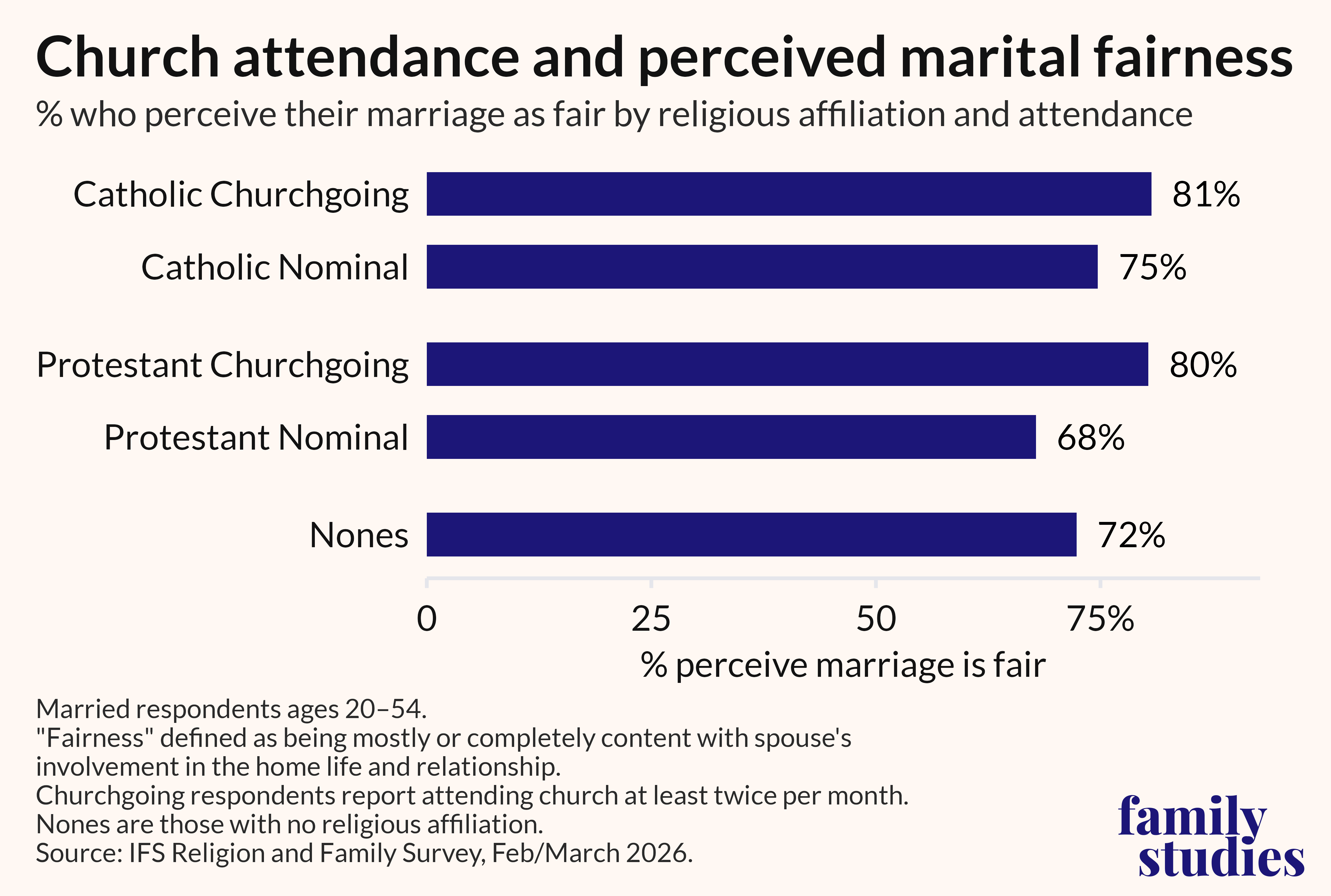
Figure 22: Share of married respondents ages 20–54 who report being in a fair marriage by affiliation and religious attendance
Value alignment is an especially strong predictor of marital fairness: value-aligned Catholics, Protestants, and Nones have 7.18 times higher odds of reporting a fair marriage than their non-aligned counterparts, with significant differences within all three groups. In other words, husbands and wives who share values—which are more common among churchgoing Catholics and Protestants—are also more likely to view their marriage as fair, and, in turn, as happy.
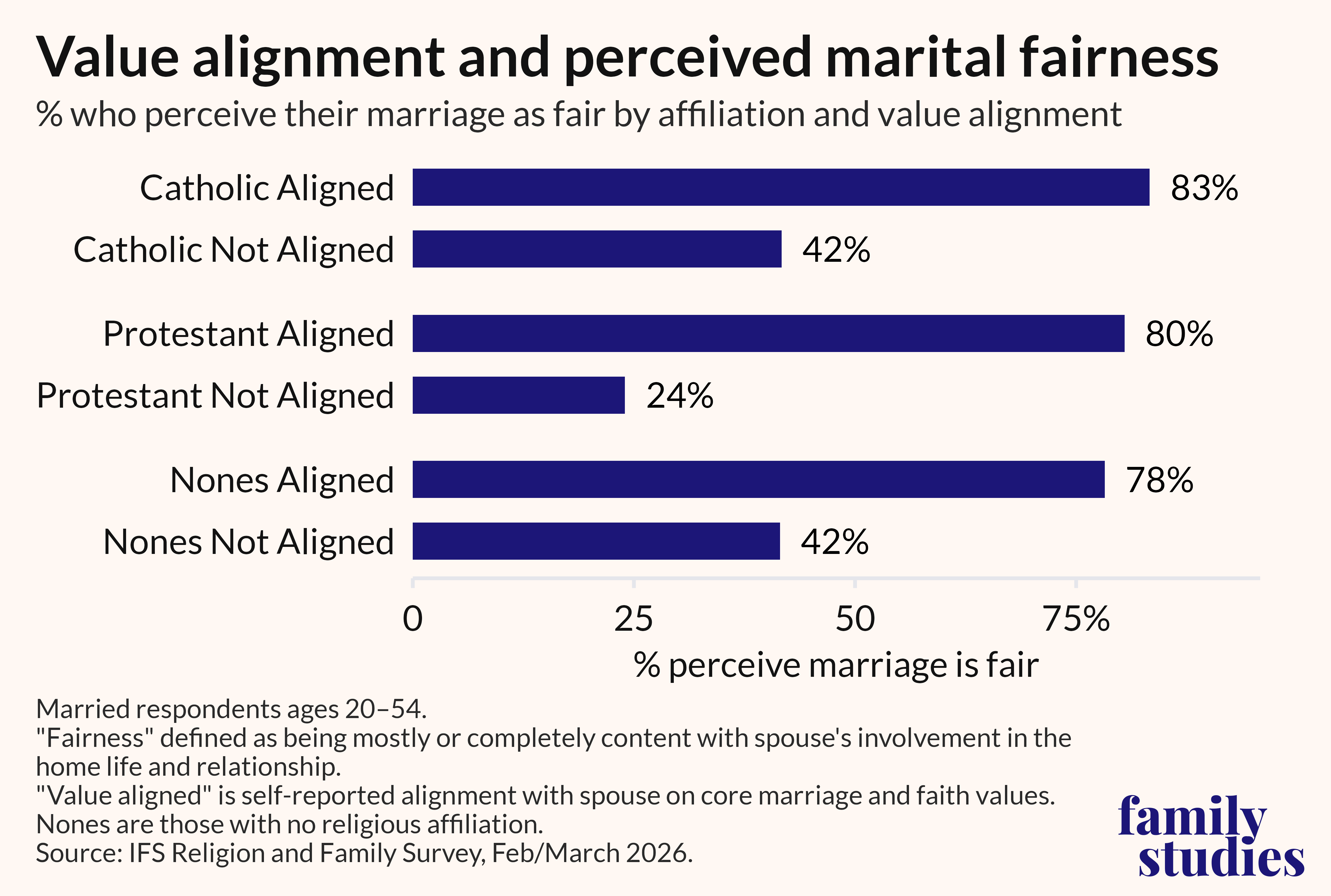
Figure 23: Share of married respondents ages 20–54 who report being in a fair marriage by affiliation and value alignment
Sidebar: The FOCUS Difference
Editor's note: The Catholic missionary ministry, FOCUS sponsored this report, and this section is based on a survey of FOCUS alumni. This data is included in our research because it allows us to measure a uniquely devout set of lay Catholics against regular churchgoing Catholics and nominal Catholics.
As demonstrated above, religion is frequently associated with marital happiness and marital stability. These findings suggest that if we are to improve marital outcomes, a fruitful upstream target is religious engagement. Here, we look at the links between religion and marriage within one growing Catholic ministry, the Fellowship of Catholic University Students (FOCUS).
College students are at an especially formative stage of development—in what the psychologist Meg Jay has called “the defining decade”—and at the crossroads of what Erik Erikson has described as a time for identity development and long-term relationship formation. According to Erikson, this is the stage for answering questions like “Who am I?” and “Who do I want to be with?” Young adults are tasked with developing both a strong sense of self and the capacity to commit to something greater than themselves—in this case, marriage.
FOCUS engages Catholic missionaries on college campuses to bring students into a deeper relationship with Jesus Christ through fellowship, Bible study, prayer, and more. It places special emphasis on the Gospel call to “go and make disciples of all nations”—to build a strong, authentic faith that can be practiced and shared “like a light on a hill.” As a result, tens of thousands of FOCUS alumni across the country are now navigating marriage and family life.
So far, the research points to a strong connection between religiosity and positive marital outcomes. But being merely “religiously affiliated” is not enough on its own; it is putting religious beliefs and behaviors into practice that appears to drive these outcomes. FOCUS seeks to instill an authentic Catholic faith that promotes human flourishing—and, in theory, that flourishing should extend to healthy relationships at a crucial time in college students’ lives. Accordingly, this section asks: Are FOCUS alumni firmly rooted in their faith? And how happy and stable are their marriages?
We answer these questions by combining data from the IFS Religion and Family Survey, which included FOCUS alumni respondents, with a separate survey fielded directly to FOCUS alumni.
FOCUS Findings at a Glance
FOCUS alumni report...
- More consistent endorsement of orthodox Catholic teachings (e.g., open to life; belief in the True Presence of Jesus in the Eucharist; marriage as covenant)
- More consistent practice of the faith (e.g., prayer, Mass attendance)
- Greater perceived marital stability
- Significantly higher levels of perceived marital fairness compared to non-FOCUS Catholic churchgoers
FOCUS Alumni: Beliefs & Practices
FOCUS alumni consistently endorse Catholic teachings more than every other group in the study. For example, 84% of married FOCUS alumni endorse marriage as a permanent commitment—completely agreeing with the statement, “Marriage is a permanent bond; thus, divorce is not acceptable except in extreme cases (e.g., domestic violence),” compared to 39% of the general Catholic churchgoing population, 52% of Protestant churchgoers, and just 6% of Nones. This matters, since belief in marital permanence is one of the strongest predictors of marital satisfaction and stability. It is also consistent with the Catholic Church’s teaching that marriage is a sacrament: an unbreakable, covenantal union.
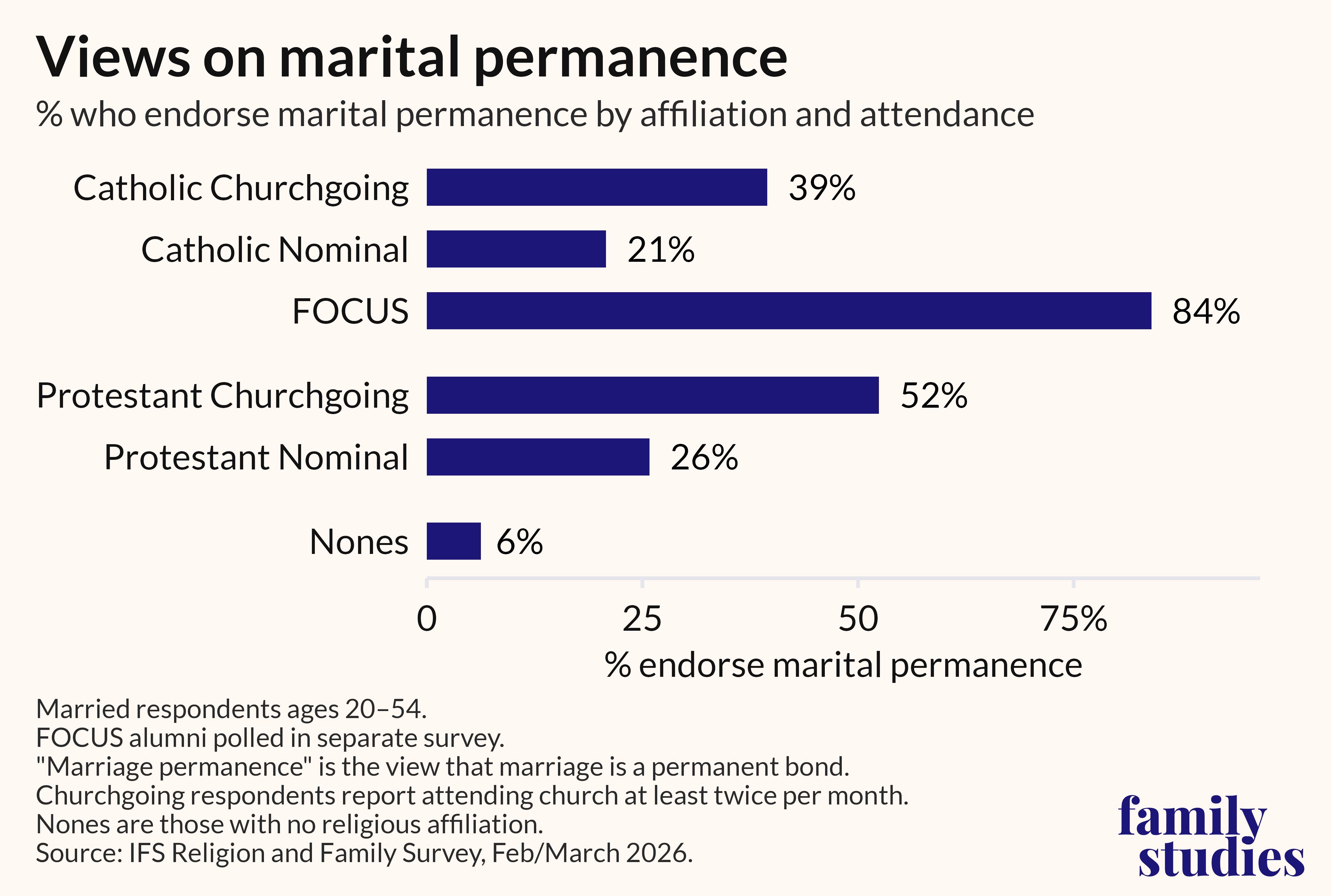
Figure 24: Share of respondents ages 20–54 who believe in marital permanence by religious affiliation and attendance
FOCUS alumni are also the most likely to endorse every other measured indicator of Catholic orthodoxy, including belief in the True Presence of Christ in the Eucharist, openness to life, marriage as covenant, and treating faith as one’s most important commitment.
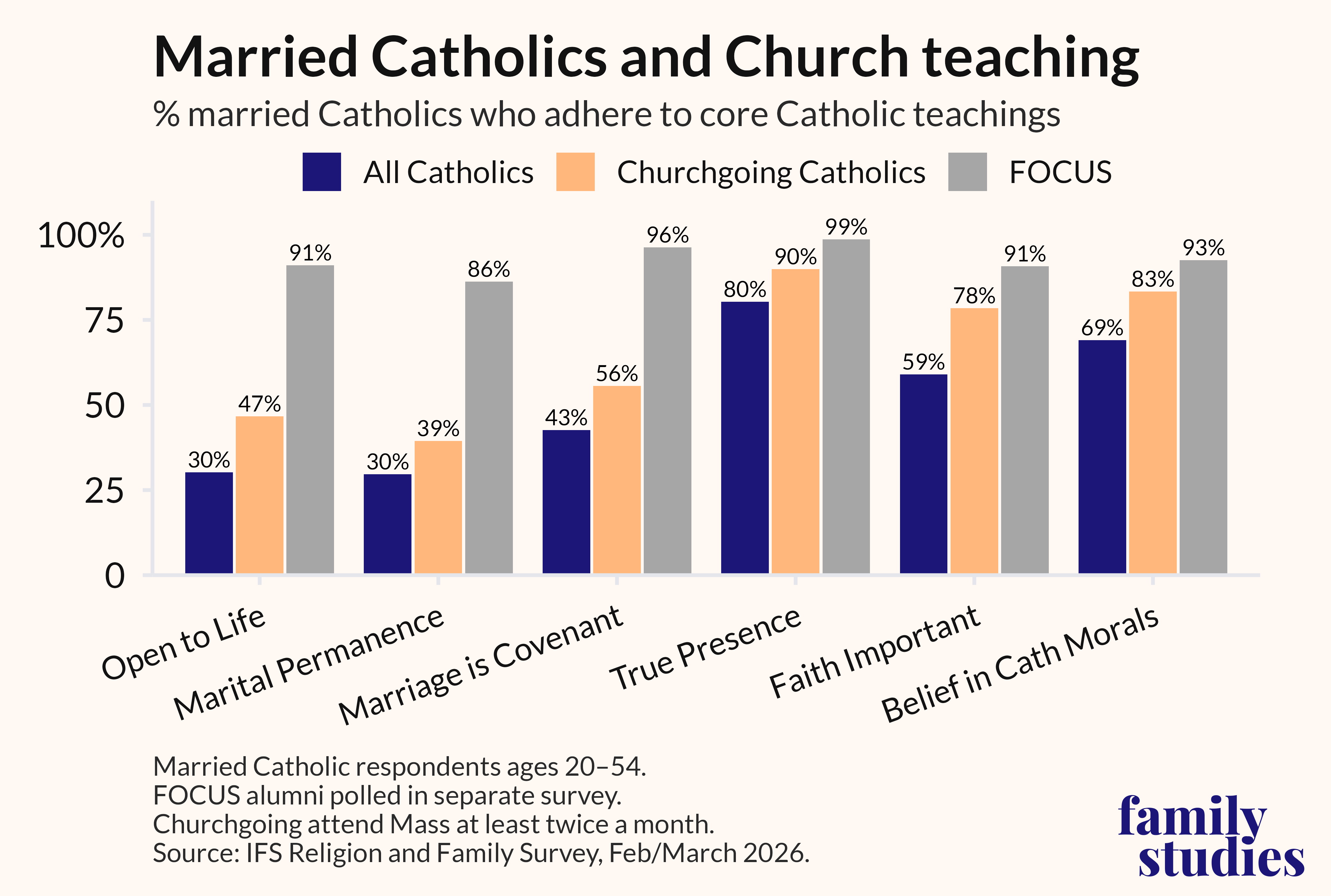
Figure 25: Share of married Catholics and FOCUS alumni ages 20–54 who endorse teachings of the Catholic Church
FOCUS alumni also report a more consistent practice of their faith, including more frequent prayer, Mass attendance, and reading of Scripture—and, for married couples, more frequent prayer together.
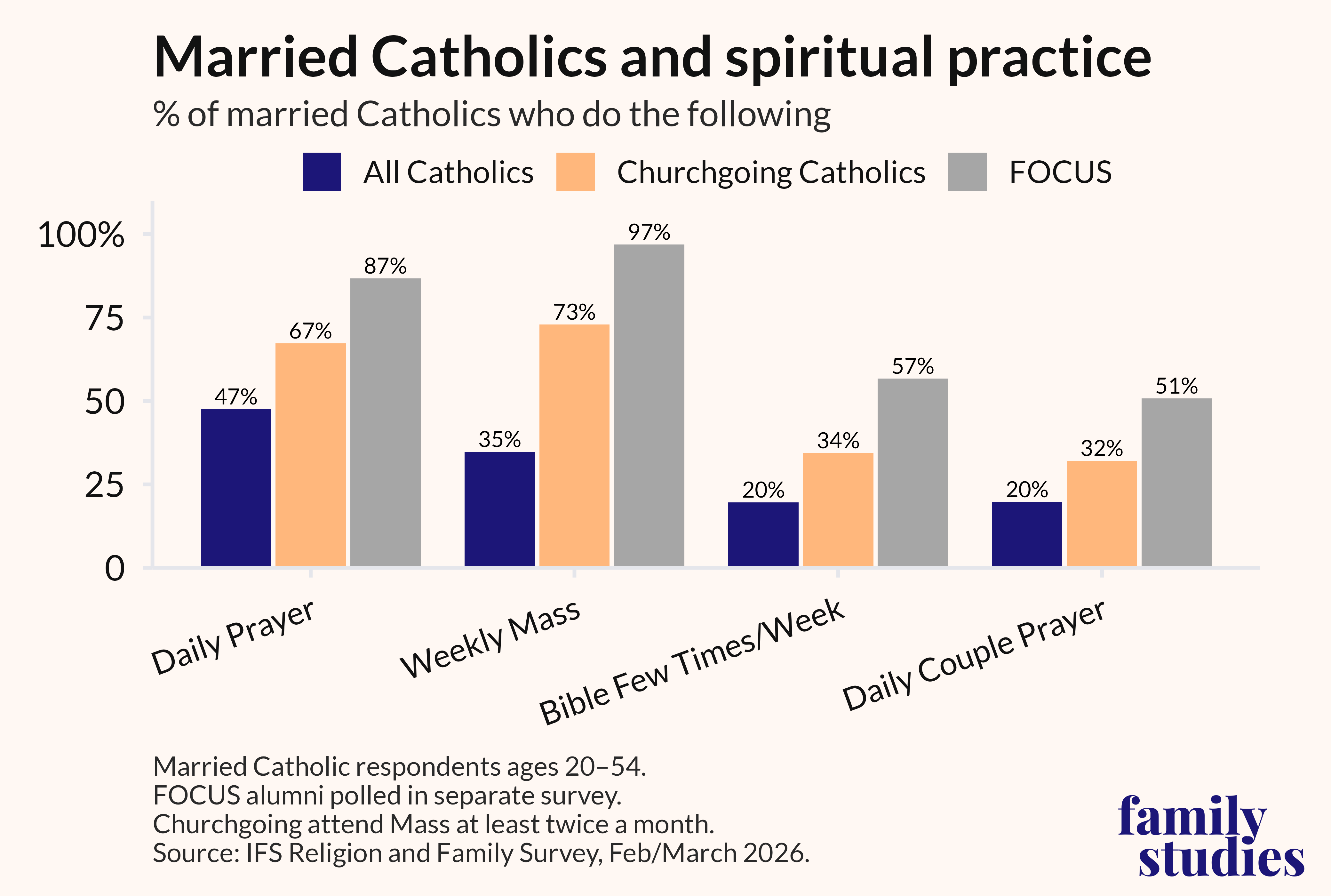
Figure 26: Share of married Catholics and FOCUS alumni ages 20–54 engaged in Catholic practices
FOCUS and Marital Happiness
FOCUS alumni, then, appear strong in both the beliefs and the practice of their faith. Does that translate into marital happiness and stability?
Among couples married 10 years or less, FOCUS alumni report the highest levels of marital satisfaction of any group: 89% report being “very” or “extremely” happy in their marriages, compared to 82% of the general Catholic churchgoing population, 73% of Protestant churchgoers, and 72% of Nones. After controlling for age, sex, race, and education, however, the FOCUS advantage is statistically significant only against nominal Protestants and Nones. Results are similar for all married couples, not just those married 10 years or less. This makes sense: newly married couples are generally happier, and most FOCUS alumni have been married less than 10 years; indeed, age is the strongest predictor of marital satisfaction in this model.
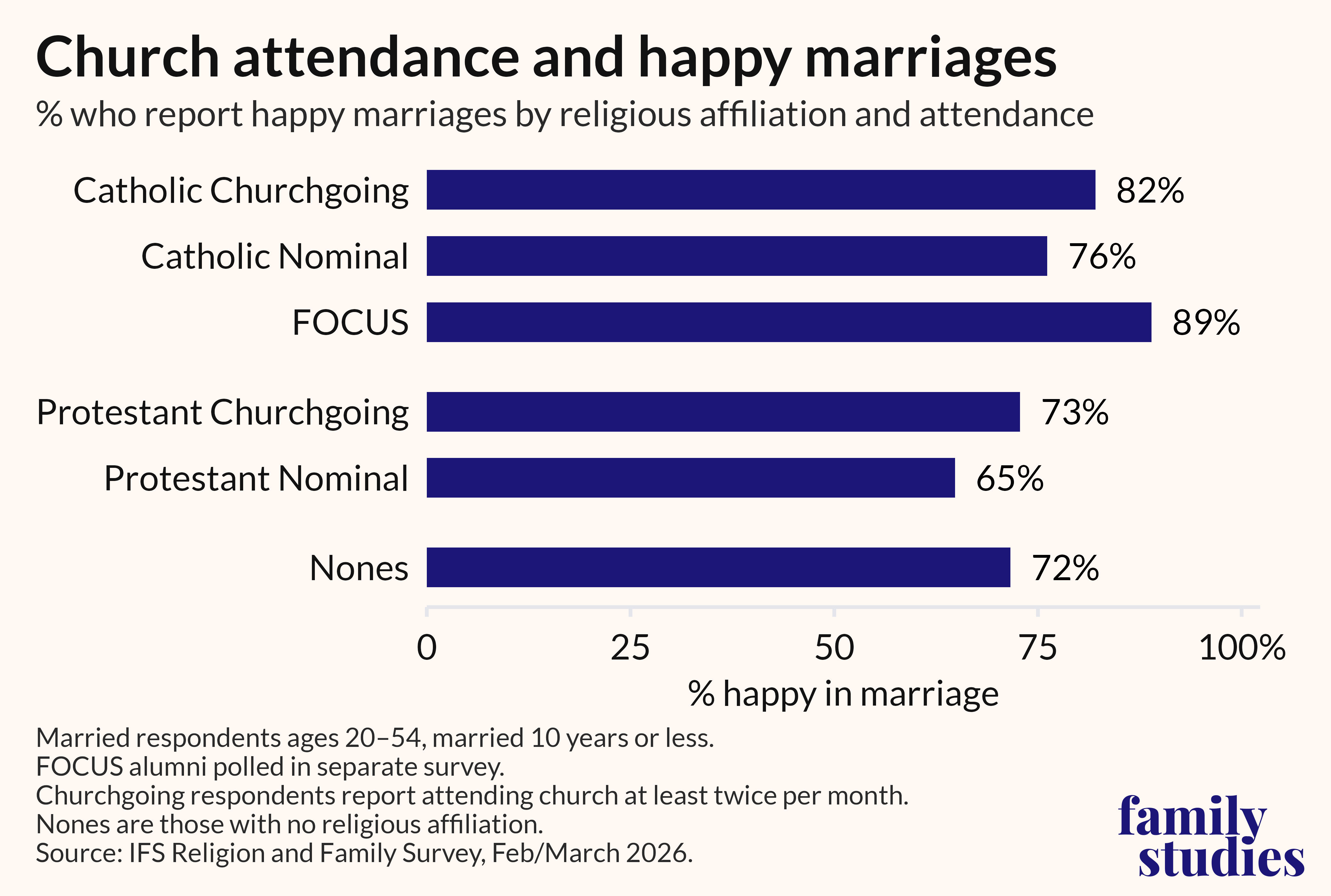
Figure 27: Share of married respondents ages 20–54 who are happily married by religious affiliation and attendance
FOCUS and Marital Stability
The first years of marriage are often called the “honeymoon” phase—a time of relative peace and stability for newlyweds. But even newlyweds are not immune to hardship: the “seven-year itch,” the cultural notion of growing restlessness around year seven, has some basis in reality, as roughly 22% and 36% of first marriages end in separation or divorce by years five and 10, respectively.
Whereas FOCUS’s marital satisfaction advantage is modest, married FOCUS alumni show a strong stability advantage. Among couples married 10 years or less, 95% of FOCUS alumni perceive their marriage as stable, compared to 65% of the general Catholic churchgoing population, 74% of Protestant churchgoers, and 70% of Nones. In odds terms, FOCUS alumni have 5.24 times higher odds of reporting marital stability than non-FOCUS Catholic churchgoers and 3.07 times higher odds than churchgoing Protestants—an advantage that holds after controlling for age, sex, education, and race.
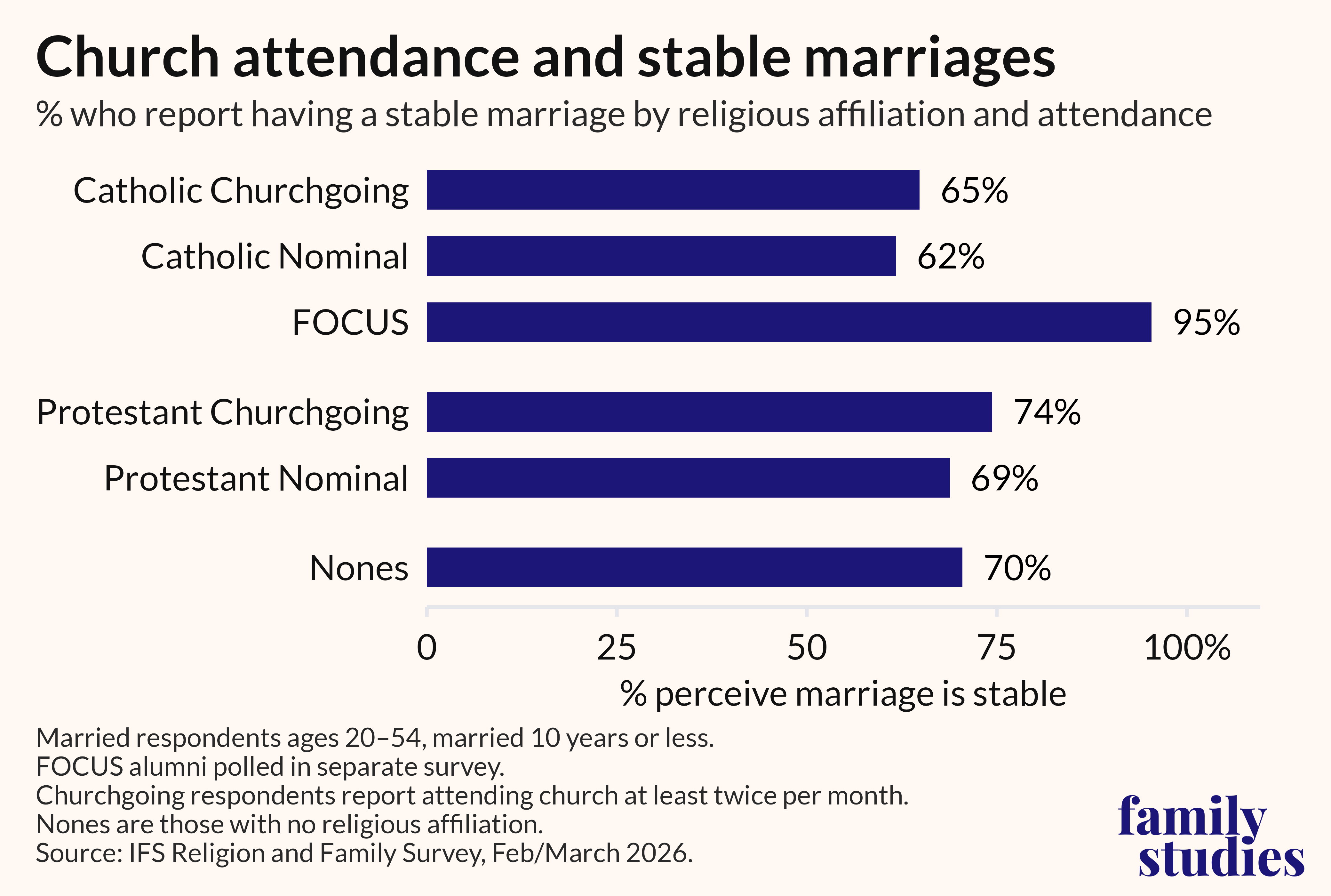
Figure 28: Share of married respondents ages 20–54 who reported marital stability by religious affiliation and attendance
FOCUS and Marital Fairness
Perceived fairness in marriage is another FOCUS strength: among couples married 10 years or less, 94% of FOCUS alumni report being in a fair marriage, compared to 83% of churchgoing Catholics, 80% of churchgoing Protestants, and 75% of Nones. FOCUS alumni have 1.75 times higher odds of reporting fairness than non-FOCUS Catholics, and 2.71 times higher odds than churchgoing Protestants, net of controls for age, sex, race, and education.
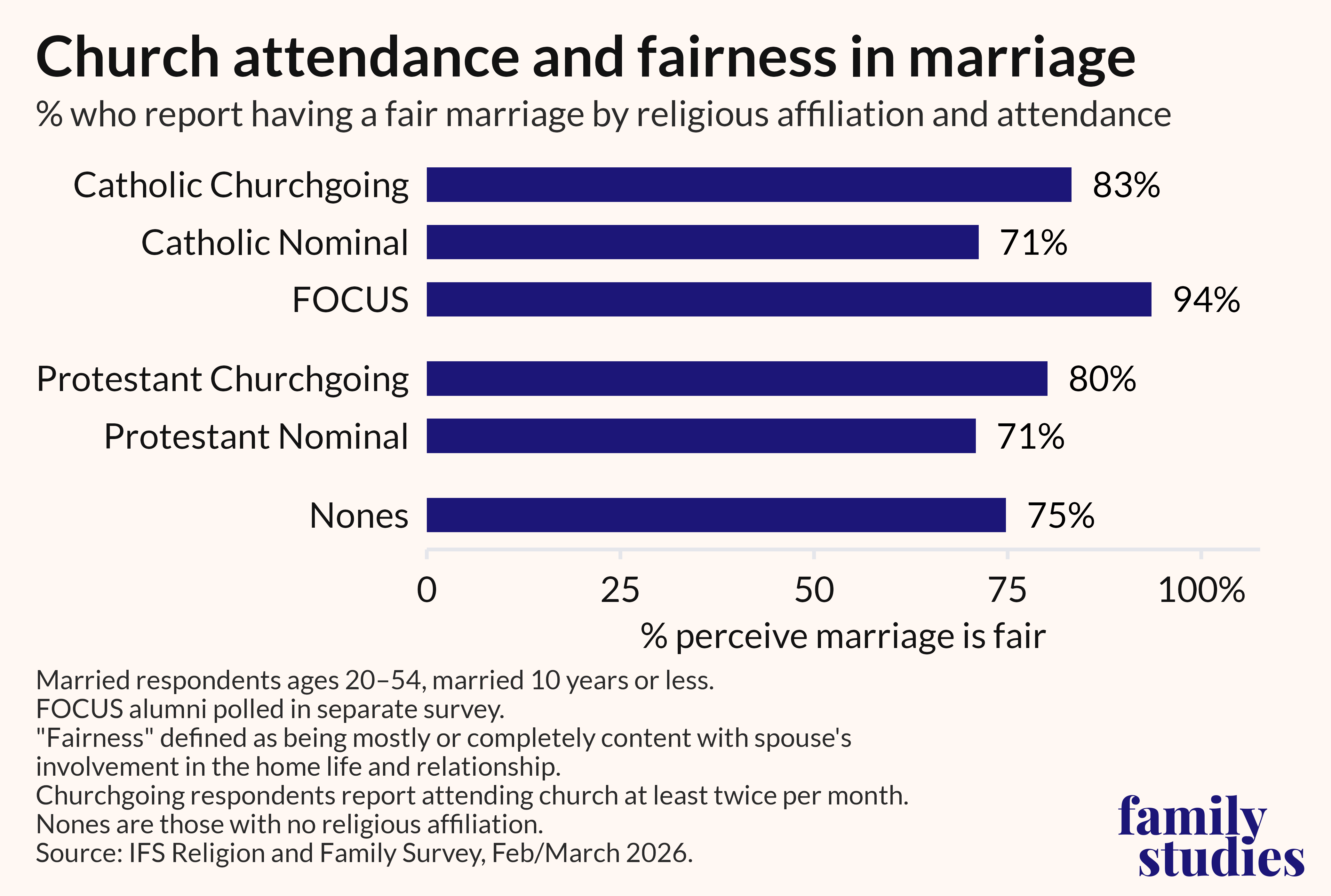
Figure 29: Share of married respondents ages 20–54 who report being in a fair marriage by religious affiliation and attendance
Sex Frequency and Satisfaction in the FOCUS Group
Sixty-seven percent of married FOCUS alumni report having sex at least once a week, compared to 69% of the general churchgoing Catholic population, 60% of Protestant churchgoers, and 47% of Nones. After controlling for age, sex, and education, however, both non-FOCUS churchgoing Catholics and nominal Catholics show a significantly higher likelihood of weekly sex than FOCUS alumni. Age is the strongest predictor of weekly sex—younger respondents report higher frequencies—which explains much of this pattern.
The story for sexual satisfaction is similar. Married FOCUS alumni (49%) report higher satisfaction than some groups, but this advantage is dampened after controlling for age, sex, education, and race, with age again the strongest predictor. Net of controls, the general churchgoing Catholic population has 2.68 times higher odds of reporting sexual satisfaction than married FOCUS alumni—a surprising result given FOCUS respondents’ high marital satisfaction and their relatively short average marriage length (5.1 years) in this analysis. Given the close relationship between marital and sexual satisfaction over the course of a marriage, it is quite possible FOCUS alumni’s sexual satisfaction will rise in the years ahead.
Another explanation for these findings might be FOCUS alumni’s practice of natural family planning (NFP). Couples who practice NFP engage in periodic abstinence as a way to space out pregnancies while remaining open to having children. Our married FOCUS alumni sample’s average marriage length (5.1 years), combined with their likely embrace of NFP (91% reported being open to life), might also account for some of these findings, especially in the area of sex frequency. In other words, these findings are likely attributable to the earnest practice of their faith, rather than to a lack of desire or marital distress—especially given FOCUS alumni’s high levels of marital satisfaction and stability. Our findings here further reinforce the value of an aligned, active faith for married couples.
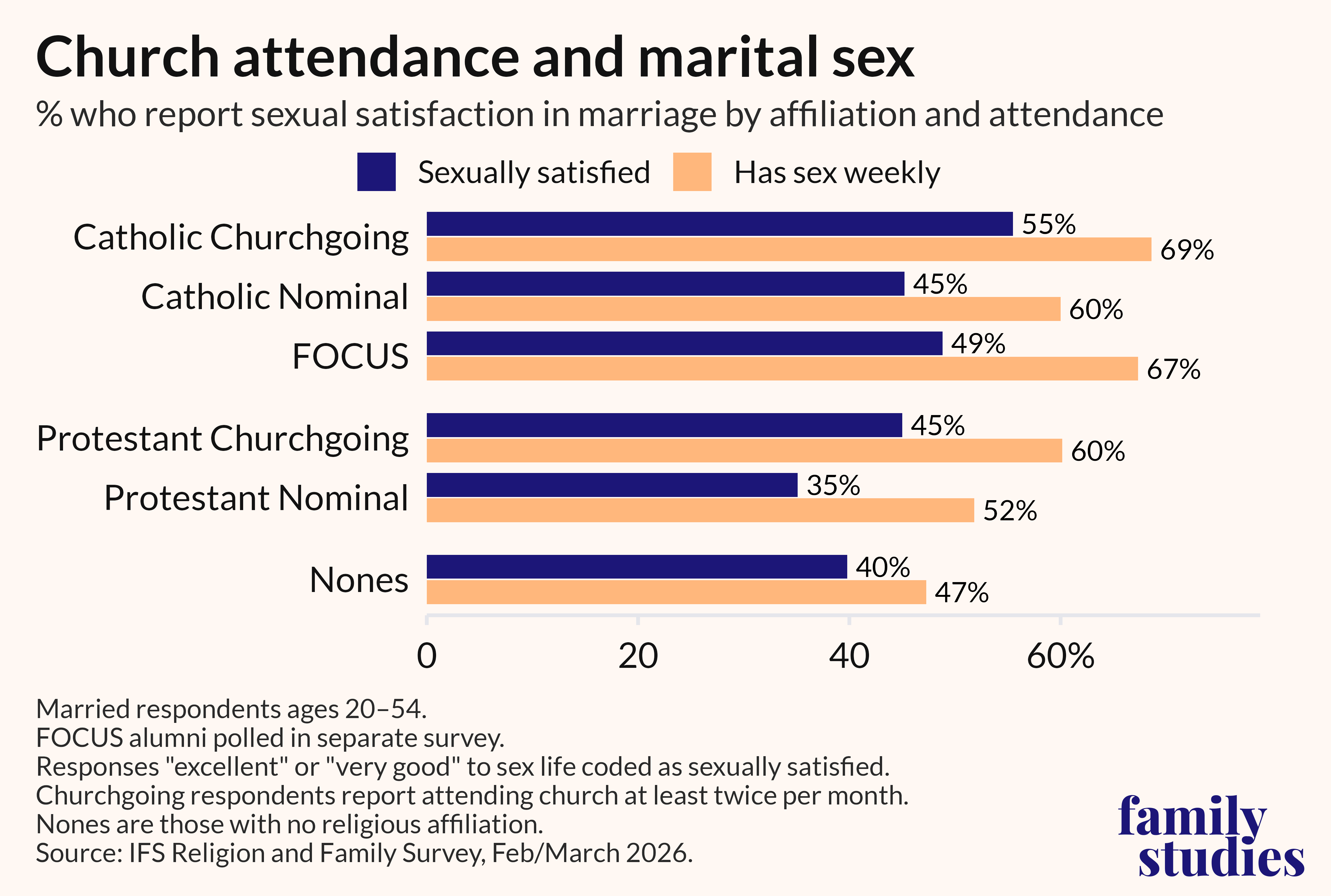
Figure 30: Share of married respondents ages 20–54 who report having sex 1+ times per week and sexual satisfaction by religious affiliation and attendance
V. Challenges for Religious Couples
Generally, then, faith seems to foster better marital outcomes. But faith is no universal remedy, and religious husbands and wives today face real challenges in their marriages and family life.
Perceived Stability. The most striking finding in the 2026 IFS Religion and Family Survey in this regard is that Catholics—both churchgoing and nominal—consistently report lower perceived stability than Protestants and Nones. And churchgoing Catholics report more thoughts about divorce than churchgoing Protestants. This is curious, since Catholics also report consistently higher marital satisfaction and lower rates of ever having divorced than Protestants or Nones.
The greater perceived fragility of Catholic marriages presents something of a puzzle, given that Catholic spouses report receiving slightly more support from their church communities than Protestants. Yet that support cut in opposite directions for the two groups: Protestants who receive more church support report more stable marriages, while Catholics who receive more support report less stable marriages. One possible explanation is that Catholic families are more likely to turn to the church only after instability has set in—a reactive pattern—while Protestant church support may operate more proactively, reaching couples before trouble arrives. This finding merits further study.
Porn Use. Pornography use may pose unique problems for Catholics and other religious believers. Data from the GSS indicate that 25% of churchgoing married men ages 20–54 view pornography monthly or more. This is likely to pose problems for many marriages, as some research links pornography use to higher rates of marital dissatisfaction and dissolution for religious couples, given they are more likely to view pornography as a moral failing.
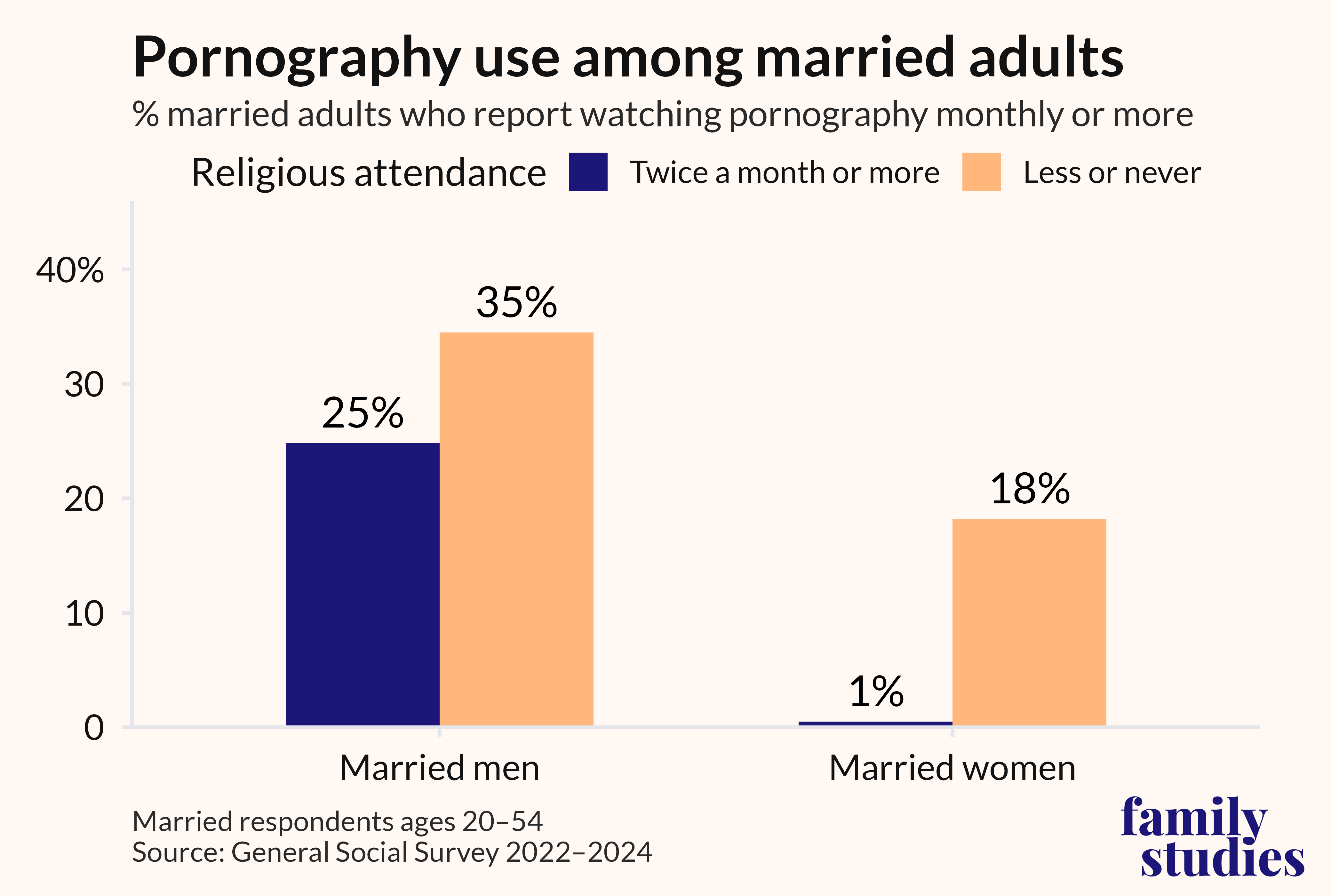
Figure 31: Share of married adults ages 20–54 by sex and pornography usage
Consider a common pattern. A teenage boy stumbles across online pornography, and, out of curiosity, keeps seeking it out. Unaware of its risks, he develops a habit, especially when he is bored, stressed, or sad—a habit that persists into young adulthood and thus coincides with dating and eventually marriage. When he begins dating, he may be unaware of the scope of the problem, or too ashamed or afraid to disclose it. At some point in the marriage, his wife discovers it, through disclosure or otherwise, and feels betrayed, straining the relationship.
An event like this would be destabilizing for most couples, but it may be especially so for churchgoing Catholics and Protestants who hold sex to be sacred. Practicing Catholic spouses may hold higher expectations—and lower moral tolerance—for a spouse’s transgressions in this area. It is possible that issues related to pornography lead Catholic spouses to question their marital stability without necessarily leaving the marriage.
Large families. Catholic couples with larger families also appear to struggle more than peers with smaller ones. Families with three or more children report lower levels of marital satisfaction than their peers with fewer children; a similar divide appears among Nones and the general population, though is notably absent among Protestant families. Because many religious traditions, and Catholics in particular, encourage openness to children, it matters that local churches provide structures to support couples raising multiple young children. Churchgoing Catholic and Protestant parents who report good social support also report higher relationship satisfaction, but unfortunately, only 46% of churchgoing Catholic parents report receiving even “some help” from their church community. Churchgoing Protestant parents receive more support, with 57% reporting “some help” from their church community. In other words, most churchgoing Catholic parents and a large share of Protestant parents get little support from their congregations, a real gap given how mobile and far-flung modern families have become, often living far from extended family.
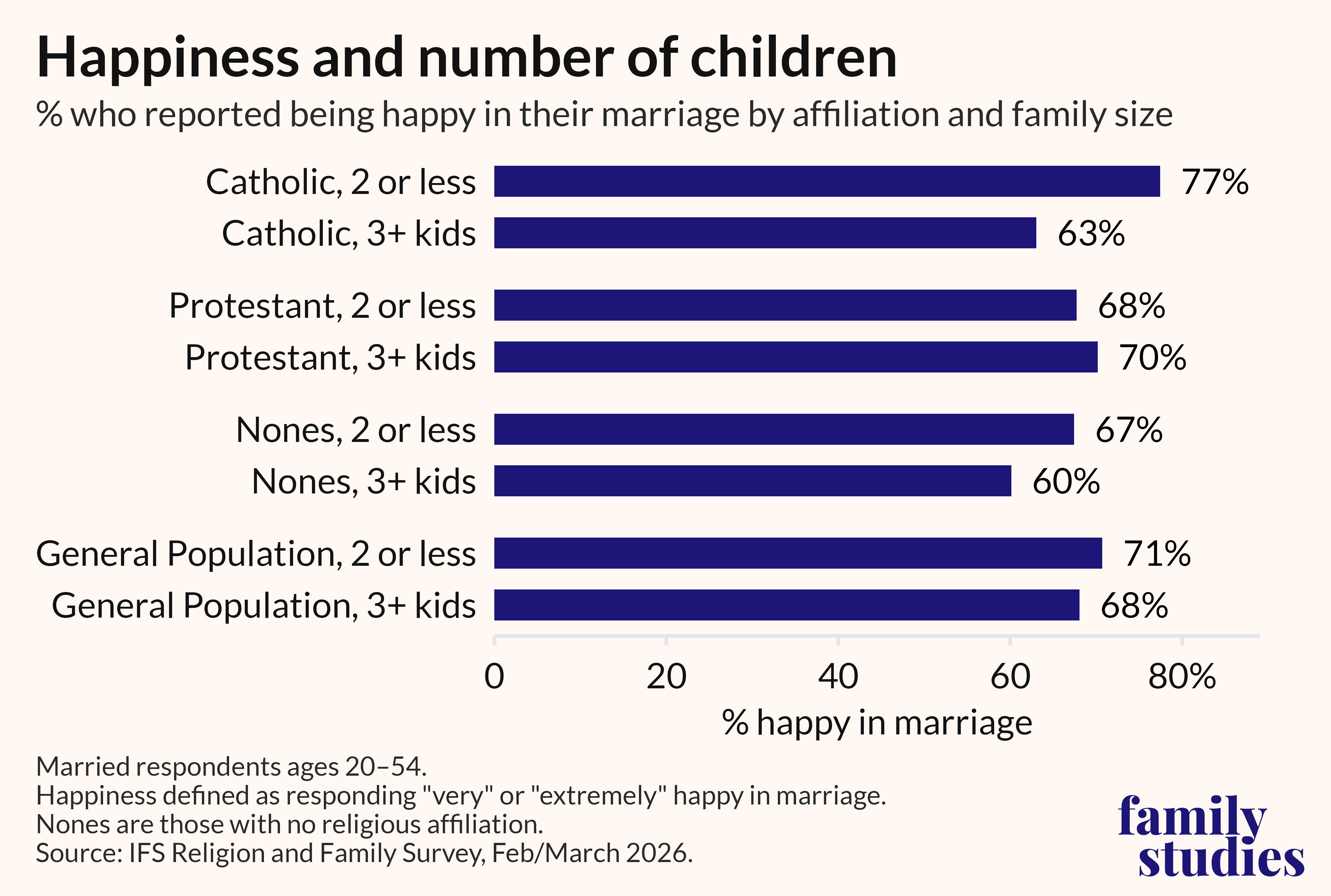
Figure 32: Share of married respondents ages 20–54 who report being happily married, by religious affiliation and family size
Mental Health. Contemporary mental health challenges might also be a factor at both the individual and couple level for Catholic and other churchgoing husbands and wives. Even though mental health struggles are less common among practicing Christians, believers are certainly not immune to such challenges today and might even encounter some unique problems related to mental health. When they do experience challenges, they are typically more likely to seek help from religious leaders/clergy than from secular therapists. Spiritual counsel can be beneficial, but very rarely do these providers possess the professional training and background necessary to guide couples through challenges such as betrayal, infidelity, trauma, and other contemporary mental health difficulties. There has been a growing sensitivity to this need in recent years, and as such, the field of Christian mental health is growing. Christian individuals and couples should consider seeking out value-aligned therapists through organizations such as the Catholic Psychotherapy Association (CPA) or the Christian Association for Psychological Studies (CAPS). A value-aligned therapist, complemented by a trusted spiritual director, can be a robust support system for Christian individuals and couples in need of counseling.
Orthodoxy. A further challenge facing the Catholic Church, and the couples within it, is that a large share of Catholics do not fully embrace orthodox teachings such as marital permanence—in some cases, not even a majority of churchgoing Catholics, as shown earlier. That matters for two reasons. First, it means husbands and wives in the pews are not always aligned with one another or with their fellow parishioners, and such misalignment can weaken the marital bond. Second, Catholics who do not embrace these teachings are less likely to enjoy the strong, stable marriages that flow from a more orthodox faith: belief in marital permanence, we find, is among the strongest predictors of both marital satisfaction and perceived stability. For Catholics in particular, more can be done at the parish and diocesan level—through programs like pre-Cana, youth and adult catechesis, Catholic schools and media, and online platforms—to teach the sacred, permanent nature of matrimony. On this front, FOCUS alumni offer a hopeful model: they outscore every other Catholic group in the study on both their adherence to Church teaching and the perceived stability of their marriages.
VI. Putting the Pieces Together: Religiosity, Communion, and Marital Success
Our results point to a vital connection between religion, marital unity, and marital success. Religious couples consistently report higher marital satisfaction, more frequent sex, and greater sexual satisfaction than secular couples—and they are less likely to divorce.
What is it about religiosity that promotes these outcomes? The answer requires some nuance, given the complexity of religiosity as a social force. Simply identifying as religious is not enough: nominal Catholics and nominal Protestants alike consistently report lower marital satisfaction, stability, and sexual satisfaction than their churchgoing counterparts—and on some measures, do worse than Nones. By contrast, Catholics and Protestants who regularly attend church and pray frequently report stronger marriages.
What is it, then, about an active faith life—going to church and praying together—that builds a healthy marriage? Our findings point to two forces: commitment and communion.
Churchgoing husbands and wives are far more likely to see marriage as permanent—not contingent, not conditional, but binding. That belief is one of the strongest predictors in our entire study: it forecast greater relationship satisfaction, greater stability, and greater sexual satisfaction. Openness to having more children matters too, boosting sexual satisfaction markedly, especially among Catholic couples.
But communion is the deeper story. Couples aligned on core values and beliefs are, by a wide margin, the happiest and most stable in our study. Why? Because shared values breed a sense of fairness and agreement. Spouses who agree on the things that matter most—faith, morals, the division of roles at home—have less to fight about and less reason to keep score. Marriage is a fundamentally interdependent enterprise; it leaves little room for spouses pulling in opposite directions on fundamental questions. Moreover, agreement fosters friendship about the things that matter in marriage and family life—a crucial ingredient to a strong union.
And when conflict does arise—as it does in every marriage—the belief in marriage as permanent becomes a kind of ballast. It roots the couple in something larger than the argument of the moment: an institution worth suffering for, worth sacrificing for, worth staying in, even when staying is hard. Faith, in other words, does not just bring couples to the altar. It gives them a reason to stay, and a way to experience happiness when they do.
Recommendations
Based on our present findings, we recommend the following steps to marriage-minded young adults, married couples, and churches to promote healthy marriages:
- Foster an active faith life. Beyond its direct ties to happier, more stable marriages, active faith can also guard against threats such as pornography use, infidelity, and other strains—from money to parenting—on marriage. Attend church regularly, pray often, and (if a student) consider joining a group like FOCUS that offers spiritual nourishment through personal discipleship and community.
- Practice intentional marriage discernment. Scripture instructs believers to be “equally yoked”—to join with those with whom they align spiritually—and our findings reinforce the value of that kind of communion in marriage. During dating, it is worth gauging alignment on the things that matter most: faith, morality, family roles, and more. Ask, “What values matter most to me?” and then, “What are my non-negotiables in a partner?” A Catholic considering a non-Catholic partner, for instance, might ask: “How important is it to marry a fellow Catholic?” The same question should be asked by Protestants, Jews, and other religious believers considering marrying someone from outside their faith tradition. “What would that difference mean for our marriage? What would need to be true, or agreed upon, to move forward?” Skipping this kind of discernment risks building a strong emotional or physical attachment on a foundation of unresolved differences—one that becomes far harder to walk away from later.
- Support families at the parish level. As noted above, only about half of churchgoing parents report receiving even “some help” from their church community. Many congregations—Catholic parishes especially—encourage openness to life, but many of the larger families that result are transplants without nearby extended family to lean on. Much of this hardship falls on women specifically, as they are more likely to be primary caregivers. Clergy and lay leaders should look for ways to offer programming, small groups, and simple respite that nurture these families’ faith and strengthen their sense of communion.
- Form adolescents and young adults for marriage. Catholic and Protestant leaders alike should recognize that the roots of a strong marriage are planted long before a couple ever meets—in the formation of the whole person during adolescence and young adulthood. The consistent links between shared faith and values, orthodox belief, and religious practice on one hand and marital stability on the other point upstream—to the parishes, Catholic and Protestant schools, campus apostolates, and ministries (FOCUS being a proven model)—that shape young people’s values and character well before dating or marriage begins. Investing early in this kind of formation is not a departure from strengthening marriage and family life; it is one of the most promising ways to secure it.
In Conclusion
The stakes could not be higher for couples and churches aiming to strengthen contemporary family life. In an age marked by unprecedented digital distraction and loneliness, the value of faith and family is powerful and may well be growing. Social science suggests these two institutions are powerfully protective against early death, suicide, and despair—and, more positively, that they may be among our most powerful vehicles for human flourishing in the wake of the digital revolution. This report further suggests that the ties that bind are not obstacles to human flourishing today—as they have been portrayed since the counterculture of the 1960s and 1970s—but rather havens in what can often feel like an increasingly heartless world.
Indeed, GSS data show that no group of American men and women ages 20–54 has steered clear of the nation’s recent “happiness crash” more successfully than the religiously married. Men and women tethered to the institutions of faith and marriage are more than twice as likely to be very happy today compared to their peers who are not. Strengthening faith and family is therefore not a matter of nostalgia but of necessity: it could mean the difference between a society that sustains the foundations of personal and social well-being and one that leaves its people to drift alone and unhappy in an increasingly atomistic age.
Editor's Note: Download the full report to view the data and methods section and references.